
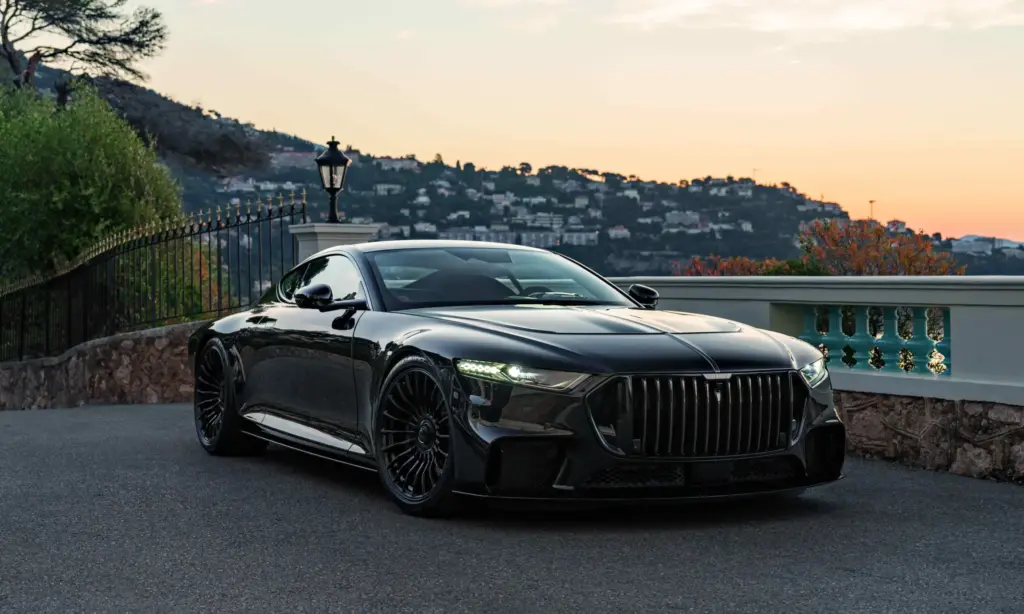
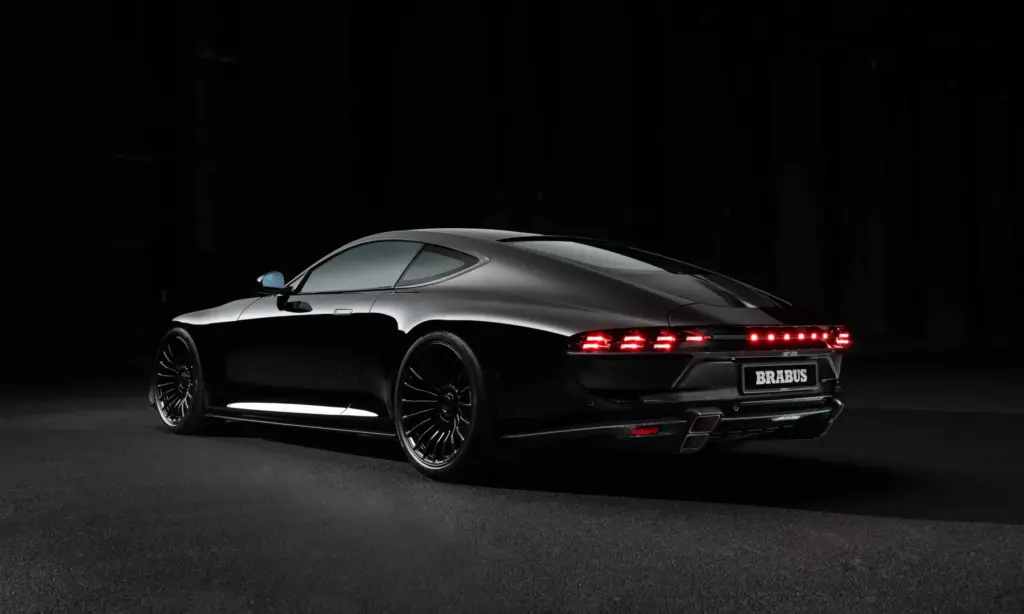
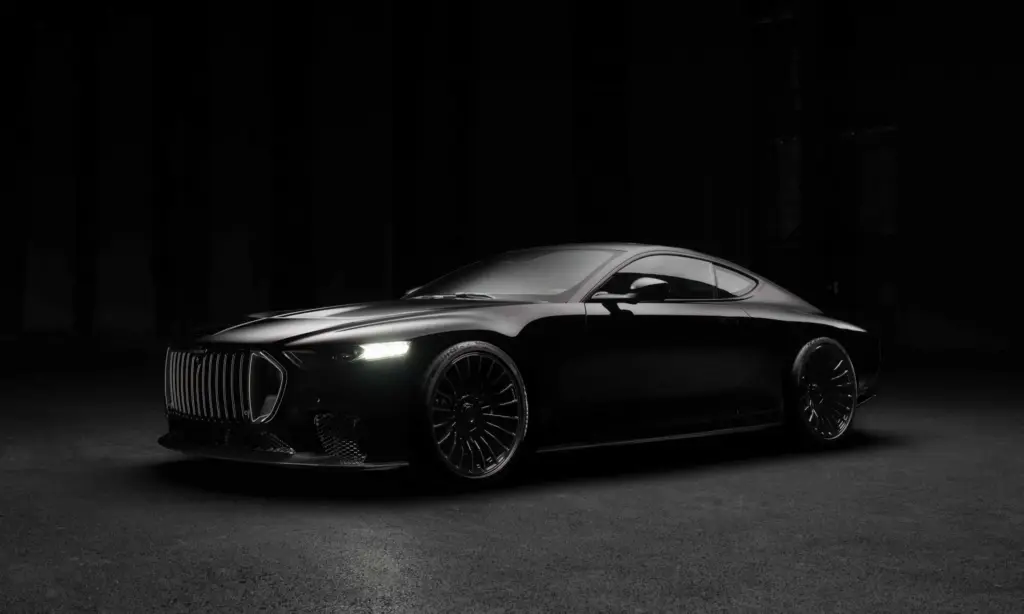


Brabus has always lived in the narrow space between engineering excess and German restraint, but the Bodo pushes that formula into a new space. This is not a one-off show car built to fill a stand in Geneva or Monterey. It is a 2+2 Gran Turismo coupe shaped as a tribute to Bodo Buschmann, the company’s late founder.
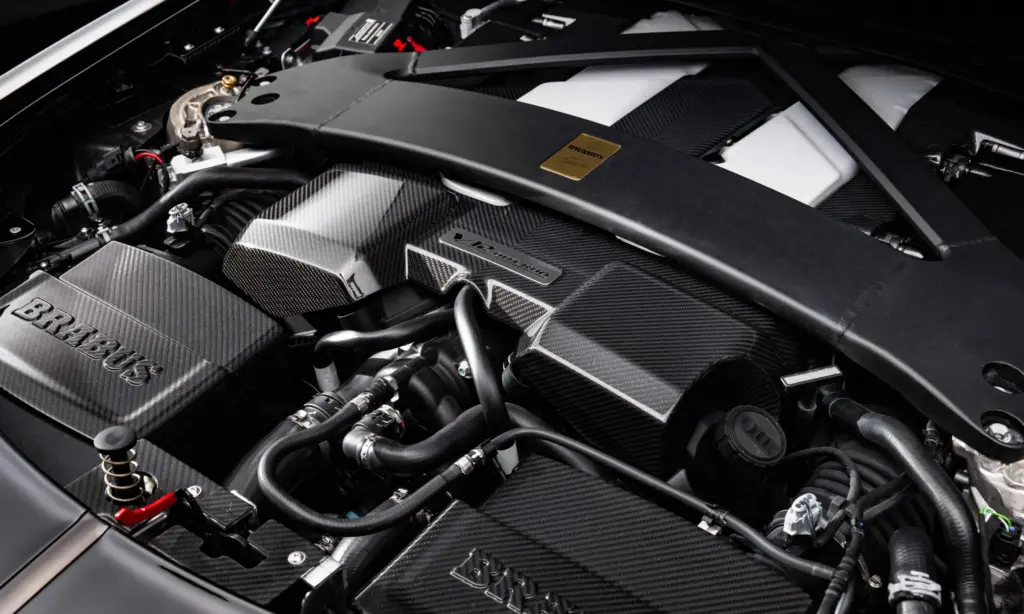
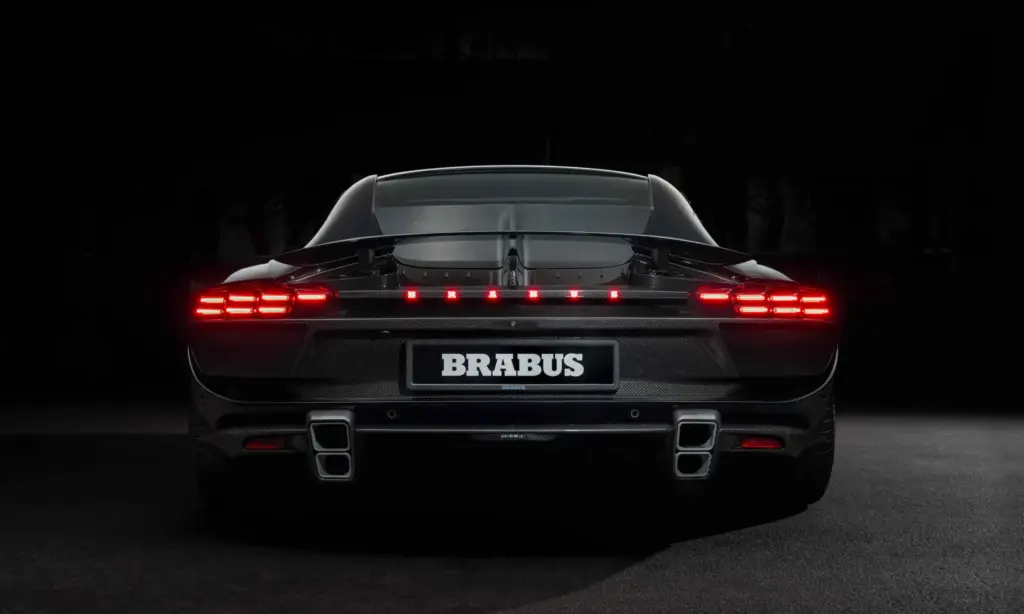
The brief is clear. The Bodo is a coachbuilt supercar, limited to 77 cars worldwide, and it carries a hand-built 5,2-litre twin-turbo V12 rated at 735 kW and 1 200 N.m. The claim is not subtle. Nor is the carbon fibre body, the active aero or the electronically limited top speeed of 360 km/h. For a brand that built its reputation on Mercedes tuning and then climbed into full-house coachbuilding, this is the logical extreme.
A dream that sat waiting for years
Constantin Buschmann frames the Bodo as the car his father kept talking about but never got to see realised. Brabus says the concept had been revisited for close to two decades before the final shape was locked down. CAD work produced iteration after iteration, with engineers, designers and production specialists refining the package under Constantin Buschmann and CTO Jörn Gander. The top speed target, 360 km/h, was fixed from the first sketch. That detail alone tells you what sort of machine this is. This is a grand tourer with the manners of a long-distance luxury coupe and the temperament of a serious autobahn weapon.
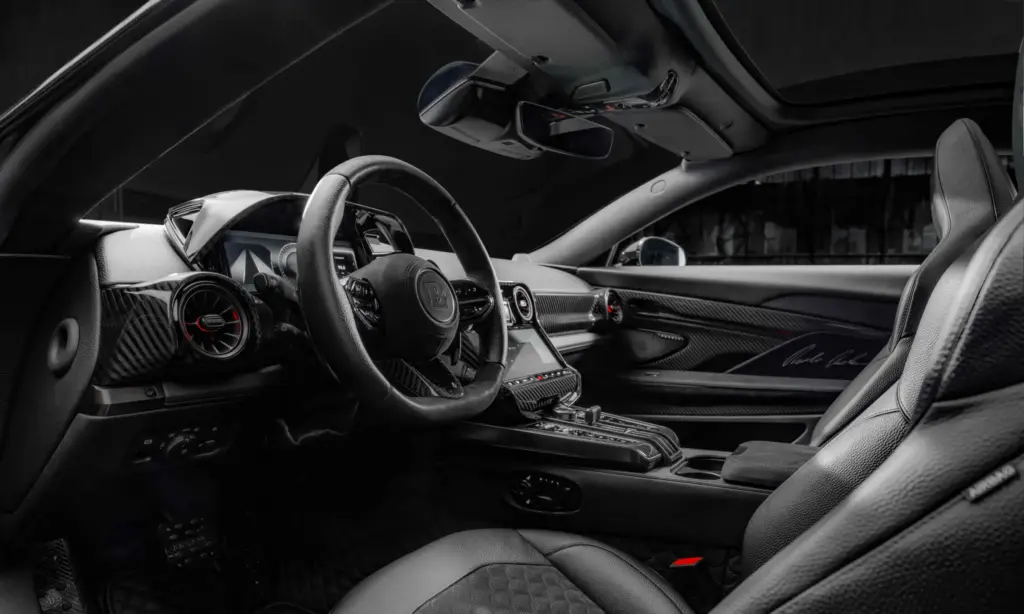
The 77-car production run is tied to 1977, the year Bodo Buschmann founded the company. Inside and out, the references are specific. There is a 77 badge beneath the rear screen. The late founder’s signature appears in the door panels. Even the ownership story has been elevated, with each car built to order and priced from one million euros before VAT in Germany.
Carbon fibre with intent
The Bodo wears an all-carbon-fibre body, apart from the windows and fixed panoramic roof, and Brabus has taken the material far beyond the usual cosmetic treatment. The panels are pre-preg components cured in autoclaves, then finished for tight tolerances and clean surfaces. The result is not just stiffness and lightness, but shape. At 5 062 mm long and 2 027 mm wide, the car is vast, yet its 1 774 kg dry weight keeps it from feeling bloated.
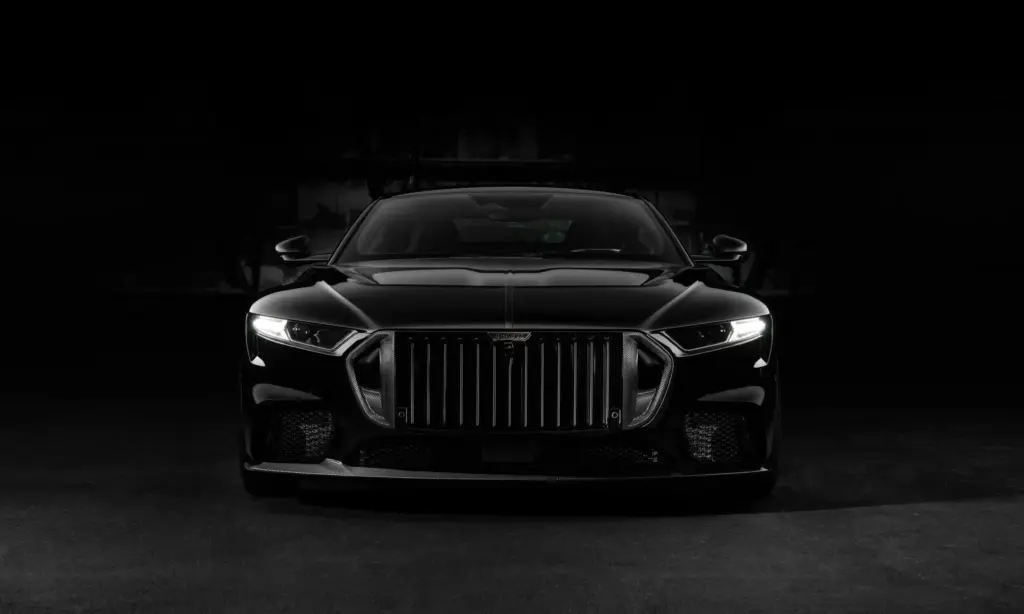
The front end is all function and menace. The LED matrix headlights sit beside a grille with 13 vertical slats and the Brabus emblem, while two large ducts are built into the nose. The front bumper channels air to the water and oil radiators, as well as the front brakes, and the exposed-carbon spoiler adds downforce without softening the visual hit. In profile, the car sits low at 1 305 mm, its rear shoulders tapering into a tail that looks drawn with a knife rather than a pencil.
The wheel package is as serious as the bodywork. Brabus Monoblock Z-GT 21-inch Shadow Edition wheels, are forged, CNC-machined and finished in black. Continental developed SportContact 7 Force tyres specifically for the Bodo, sized 275/35 and 325/30, respectively. The tyre construction is tuned to alter the contact patch under load, which should give this car the sort of high-speed composure that matters when you are asking a rear-drive V12 coupe to cover ground at serious pace.
The twelve cylinder heart
Brabus is not hiding behind marketing language here. The Bodo uses a hand-built 5 204 cm³ V12 with two turbochargers, flow-optimised cylinder heads, a ram-air airbox, high-efficiency charge-air cooling and engine management calibrated by Brabus itself. Output is 735 kW, or 1 000 hp, at 6 400 r/min. Maximum torque is 1 200 N.m available between 2 900 and 5 000 r/min. The transmission is an eight-speed torque-converter automatic, though the driver can take manual control through carbon paddle shifters.
Power goes to the rear wheels only, via an electronic differential that can lock fully when required. The suspension is a double-wishbone front, multi-link rear setup with electronically controlled aluminium coilover struts developed alongside KW. There are five drive modes, from Wet through to Individual, and the system also alters damping, throttle response, shift behaviour and traction control logic as the mood changes.
Engine: 5,2-litre twin-turbo V12
Power: 736 kW
Torque: 1 200 N.m
Transmission: Eight-speed automatic, rear-wheel drive
Top Speed: 360 km/h
The performance figures are properly absurd. Brabus quotes 0 to 100 km/h in 3,0 seconds, 0 to 200 km/h in 8,5 and 0 to 300 in 23,9 seconds. The brakes are carbon-ceramic, 410 mm with six-piston calipers up front and 360 mm with four-piston calipers at the rear. There is also axle lift, which raises the car by about 25 mm before it drops back to normal ride height at 45 km/h.
A cabin built for distance
The cabin is the sort of place that reminds you Brabus still understands luxury as something tactile. The cockpit was handmade in the company’s upholstery workshop, trimmed in black leather across multiple textures, with exposed carbon fibre on the steering wheel, dashboard, centre console and doors. High-gloss accents keep the dark theme from turning flat. The seats are shaped for support rather than showroom drama, and the silhouette of the car is embroidered into the backrests.
There are stainless-steel entry plates, Shell stitching on all four seats, Double-B embossing, and a Brabus plaque in the usual places. Quilting extends to the floor, mats and trunk liner, while a leather-wrapped key and matching Weekender bag round out the handover.

![The Lego Koenigsegg Sadair’s Spear Sets a New Speed Record [w/video]](https://doubleapex.co.za/wp-content/uploads/2026/06/LEGO-Technic-Koenigsegg-Goodwood-Track_6.webp)

Have your say
Got thoughts on this?
No feedback yet on Brabus Bodo’s 1000 hp V12 is a Founder’s Dream Realised. Kick the conversation off.
Free. Email link only — no password.