



Changan does not have the kind of history that fits neatly into a dealership launch event and a few glossy render shots. It started in 1862, before the first petrol car had even become a serious industrial idea, and it is still here, now playing for higher stakes in electric mobility. That is a long arc from gun-making to software-heavy NEVs, and it explains why the company talks about safety and durability with the certainty of a firm that has spent generations building things that had to survive.
For South African readers, the timing is awkward in the best possible way. We recently ran a recent post on the new Changan Uni-S, but if we are honest, we have haven’t featured Changan enough on this site considering how large, old and methodical this manufacturer has become. This is not a startup trying to borrow credibility from an EV badge. It is one of China’s Big Four domestic auto groups, and it is entering South Africa with the kind of long-game thinking that local buyers usually only see from the established Japanese and Korean brands.
From gun bureau to global car maker
The company’s origin story begins with Li Hongzhang and the Shanghai Foreign Gun Bureau, founded in 1862 during the Westernisation movement. Its first job was military, not motoring. It copied foreign firearms for China’s armed forces, which explains a lot about the brand’s current obsession with strength, safety and repeatability. When the factory was shifted to Chongqing in 1937, that city became the company’s permanent base. It still is.
The move into vehicles came later. In the late 1950s, state direction pulled the business away from artillery and into automotive production. By 1959, Changan had built China’s first mass-market vehicle, the Changjiang Type 46 military jeep, which appeared at the People’s Republic’s 10th anniversary parade. That is not a random footnote. It says the company was born into state priorities, then trained in large-scale industrial discipline before it ever sold a family car.
Commercial life began in 1984 with the Star mini-vehicle, a small van that helped put Changan in front of ordinary buyers. Joint ventures with Suzuki, then Ford and Mazda in the late 1980s and 1990s sharpened the engineering side of the business. By 2006, the company had settled on the Changan name for its core brand and launched the BenBen, its first independently developed modern passenger car. The crossover boom that followed from 2011 onwards found Changan ready, not scrambling, with the Eado and CS35 and CS75 families already in the pipeline.
Today the group says it has passed 30 million cumulative global sales and has a footprint in 75 countries, with assembly bases and distribution networks stretching well beyond China.
The factory is a data centre with robots
Changan’s domestic manufacturing tells you more about its ambitions than any press release. The Digital Intelligent Factory in Chongqing is built around a physical and virtual production model. More than 12,000 devices are tied together through a 5G network and mirrored in a cloud environment that reproduces 54 production lines and 1,222 workstations. The company says that digital twin setup cuts downtime and trims manufacturing costs by 20%.
The scale of automation is the headline. Welding and stamping are fully automated, and more than 500 robotic arms handle jobs that used to depend on human repetition, from adhesive application to structural welding and fitting glass. AGVs, managed by AI scheduling, feed different component sets to the main line so Deepal, Avatr and Nevo models can be built on the same physical line without the place turning into chaos.
Quality control is not left to eye-balling panel gaps. Each vehicle goes through Changan’s CA-ITVS structural validation system, then gets checked again by automated AI camera inspection to meet the company’s global structural standard. That is the sort of process that matters when you are trying to sell the same nameplate in markets with wildly different road quality, climates and dealer competence.
South Africa fits the flexible EV track
Changan’s global expansion now runs through its Vast Ocean Plan 2.0 framework, launched at Auto China 2026. The headline numbers are blunt. The company wants to move into 21 new territories, reach active presence in 118 countries, and hit 5 million annual deliveries by 2030. Of that total, 60% is meant to be NEVs.
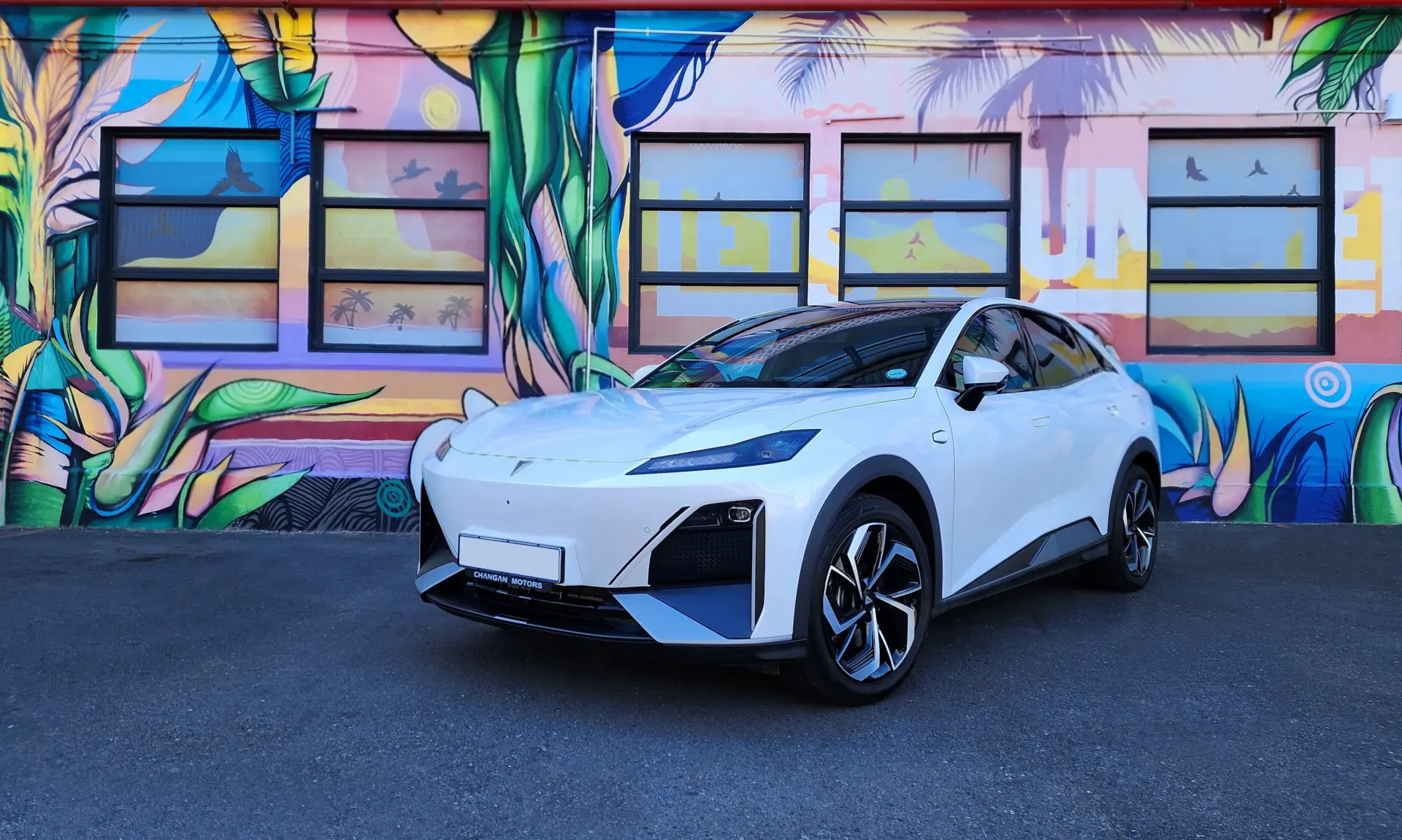
The strategy is not one-size-fits-all. In Europe and mature Asia-Pacific markets, Changan goes purely electric with brands such as Deepal and Avatr. In the Middle East, Africa and Latin America, it takes a more practical route. That is where the REEV and hybrid play comes in, because South Africa does not yet have the charging density to make every EV pitch believable.
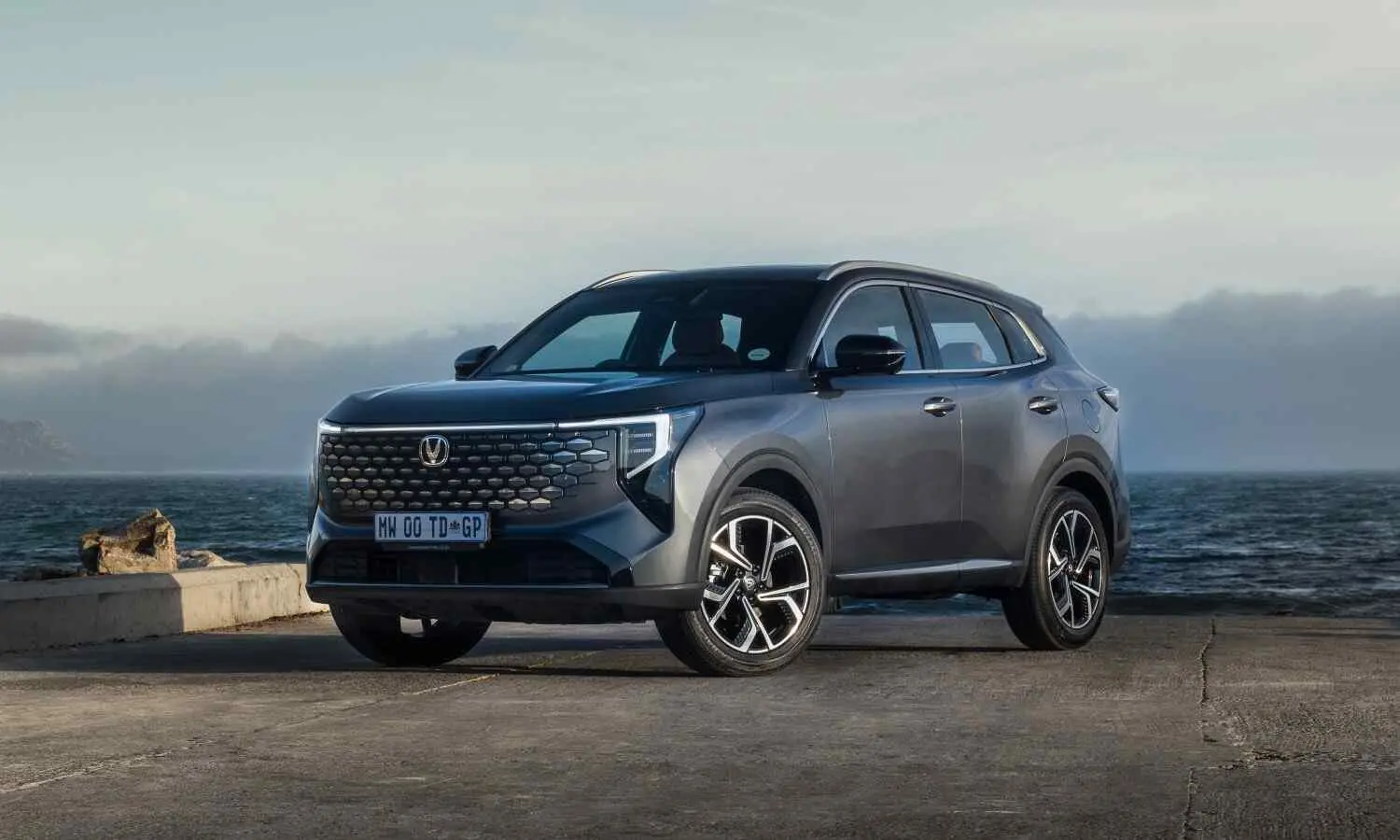
REEV tech is the clever bit. The wheels are driven by an electric motor, so you still get the instant torque and the quiet, smooth feel of an EV. A small petrol generator tops up the battery on the move, which kills range anxiety without dragging the car back into old-school drivetrain behaviour. The Deepal S05 REEV and the Changan Hunter double-cab bakkie are the obvious examples for our market, and the bakkie angle is the one worth watching. South Africa understands a properly sorted double cab faster than it understands another urban EV crossover.
The last word is not electric, it is practical
Changan’s philosophy is built around “Lasting Safety”, which is not marketing poetry so much as a corporate worldview. The name itself is split into CHANG, meaning lasting, and AN, meaning safety. That makes sense for a company that grew out of military supply, then moved through the hard school of mass production and joint ventures before it became serious about global EVs.
The modern pitch is broader than battery power alone. Changan says it is working with a 24,000-specialist engineering pool, using design and development bases in Italy, Japan, the UK, Germany and the USA, and building for local conditions instead of shipping China-specific cars and hoping for the best. In hot markets, that includes revised battery cooling systems. In new markets, it includes distributor partners such as Jamil Motors through Abdul Latif Jamil in South Africa, plus Kaizen-style service discipline so the aftersales network does not fall apart after launch week.
That is the real story here. Changan is not treating South Africa as a curiosity. It is treating the market like a place where a disciplined, localised EV plan can actually work, provided the charging realities are respected and the product range is broad enough to meet them.

Have your say
Got thoughts on this?
No feedback yet on Changan’s 160-year journey now defines South Africa’s EV future. Kick the conversation off.
Free. Email link only — no password.