

A Ranger can be a farm tool, a family hauler, a dune runner or a long-legged tow rig in South Africa, sometimes all in the same showroom. That is the odd charm of Ford’s local portfolio. Under one roof, a buyer can cross-shop a humble single-cab workhorse, a 222kW turbo-petrol street fighter, a V6 diesel overlander, and the Raptor with its desert-racing attitude.
The Everest sits in the same ecosystem, which is why the engine story goes beyond the bakkie crowd. The brief is rarely simple commuting. A Ford diesel or petrol has to deal with caravans, boats, gravel passes, holiday hauls to the coast, and the kind of long-distance strain that exposes weak cooling, weak drivetrains and weak parts choices. Ford South Africa has built its range around that reality.
South Africa gets the widest Ranger spread worldwide
The local Ranger line-up for 2026 stretches across 23 derivatives, split between single-cab, Super Cab and double-cab body styles and spread through five main trim families. Base and XL sit at the commercial end of the scale, XLT remains the sensible mid-range pick, Sport bridges into the lifestyle territory, Wildtrak and Tremor bring more equipment and off-road intent, Platinum moves into touring luxury, and Raptor sits in its own lane entirely.
For the entry grades, Ford has kept things simple. Base and XL use the revised 2.0-litre single-turbo diesel only. Output stays at 125kW and 405N.m, but the hardware underneath has changed in a useful way. The old wet timing belt has been replaced by a heavy-duty timing chain, the fuel system has been revised, and the 10-speed automatic is now standard across auto derivatives. For buyers who work their bakkie hard, that is a practical engineering answer rather than a brochure flourish.
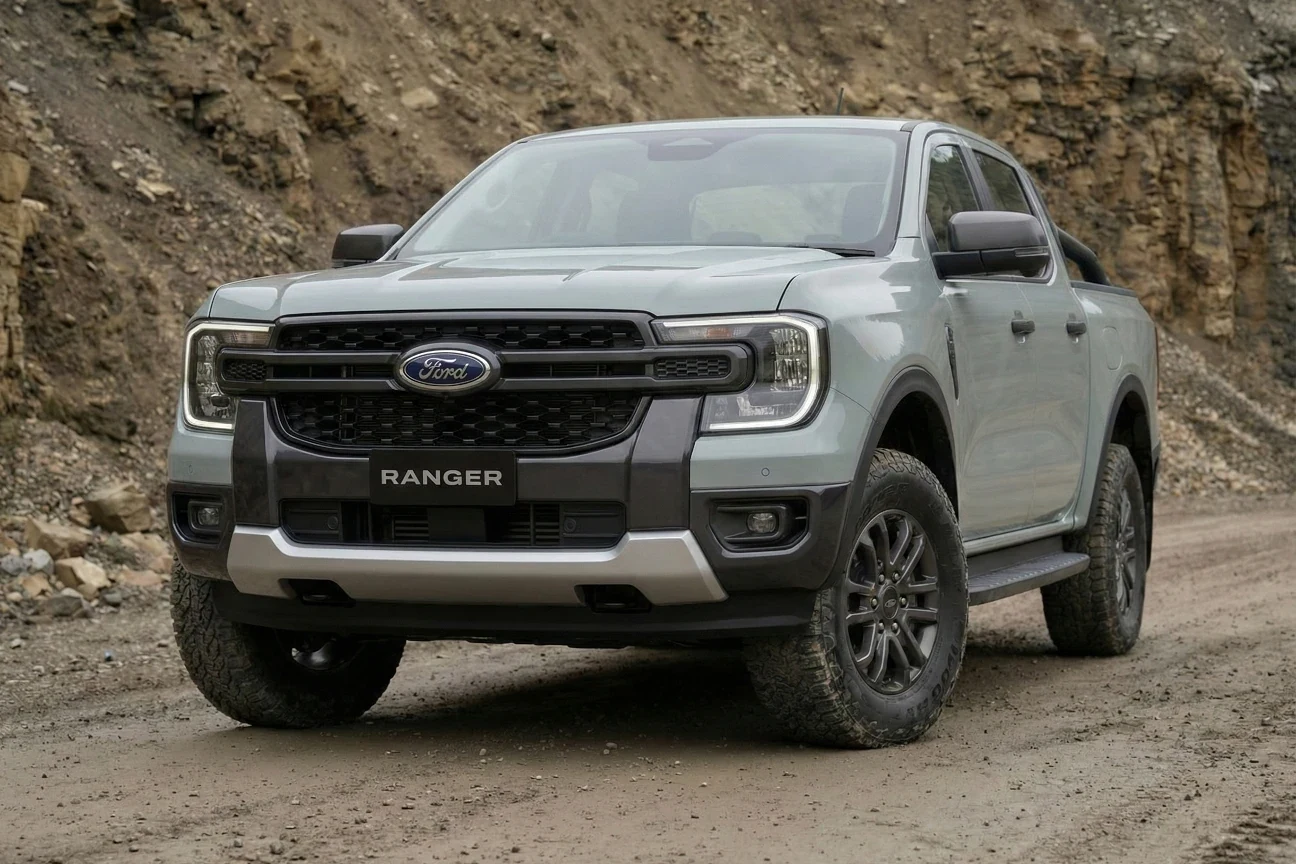
Prices start where the job-focused customer expects. The Ranger 2.0 SiT Super Cab XL 10AT 4×2 is listed at R599,500, the Double Cab XL 10AT 4×2 at R619,900, and the Super Cab XL 10AT 4×4 at R675,500. That is the foundation of the range, but it also shows how broad the South African market is. Elsewhere, those trims might be sold as fleet metal. Here, they live alongside high-end toys and expedition gear.
The XLT is the sweet spot for a lot of private buyers. It keeps the upgraded 2.0-litre single-turbo diesel with the new chain drive, and Ford has dropped the 2.0 Bi-Turbo from South Africa completely. In practice, that means the XLT diesel job now belongs to the single-turbo 10-speed auto, with the 4×4 variant stepping in as the direct replacement for the old Bi-Turbo model. Pricing sits at R655,000 for the Super Cab XLT 10AT 4×2 and R731,000 for the Super Cab XLT 10AT 4×4.
Sport splits the petrol and diesel crowd
Sport is where the local market gets properly interesting. Ford has positioned it between XLT and Wildtrak, but the real story is mechanical. Buyers can choose the 2.3-litre EcoBoost turbo-petrol, tuned to 222kW and 452N.m, or the 3.0-litre V6 turbodiesel with 184kW and 600N.m if they want four-wheel drive.
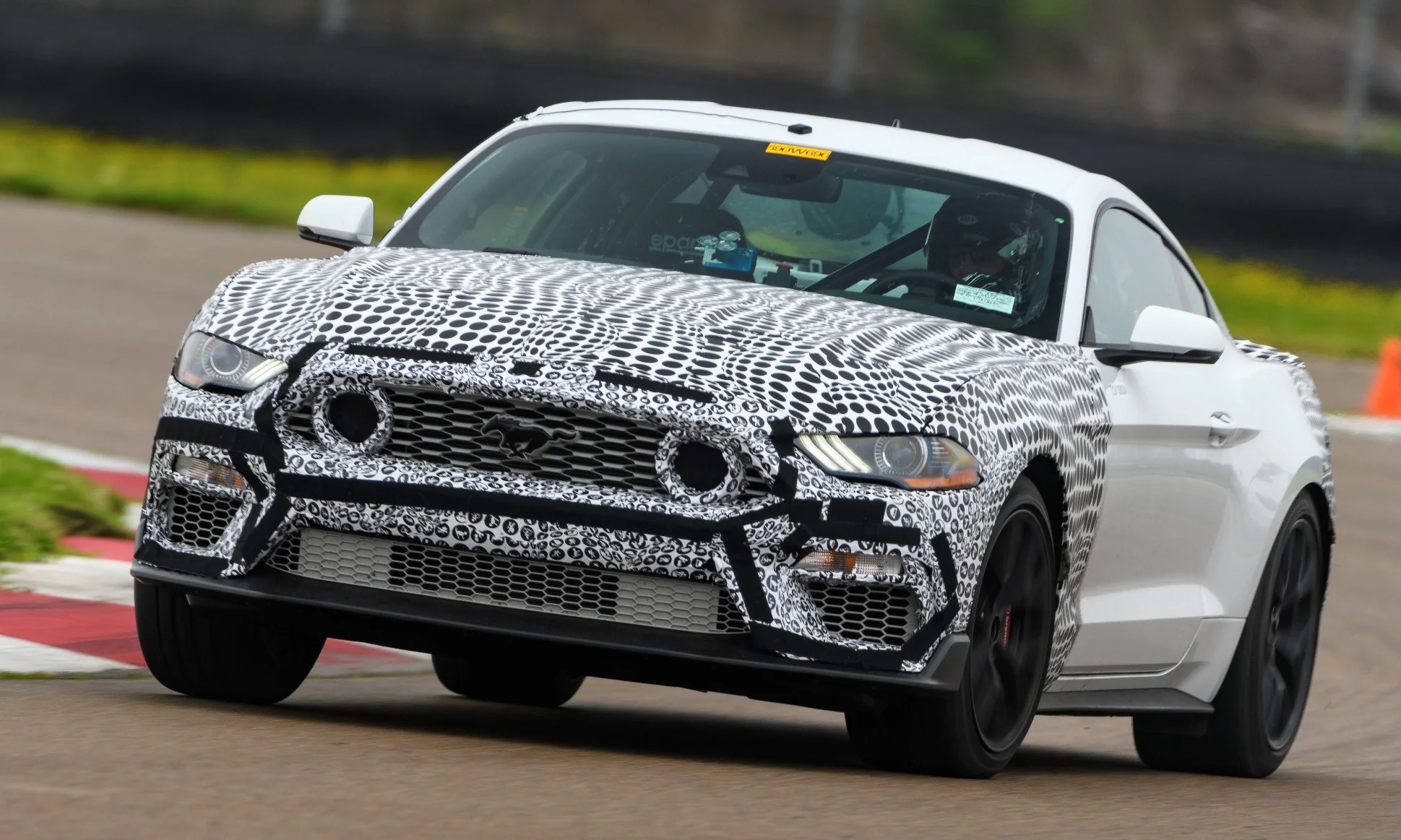
The petrol option is the one that speaks to road-biased buyers. It is a down-tuned version of the Mustang engine, and in South Africa it is limited to 4×2 form. That makes perfect sense for the customer who wants sharp throttle response and strong overtaking pace without paying for 4×4 hardware they will never use on Gauteng tar. The diesel V6, by contrast, is the obvious answer for towing, soft-road travel and heavier holiday loads.
The local pricing map reflects that split. The Ranger 2.3T Super Cab Sport 10AT 4×2 is R735,000, the Ranger 3.0TD V6 Super Cab Sport 4WD is R825,000, the Ranger 2.3T Double Cab Sport 10AT 4×2 is R839,600, and the Ranger 3.0TD V6 Double Cab Sport 4WD is R995,000. If your life includes trailers, boats, horseboxes or remote gravel, the V6 diesel earns its keep quickly.
South African bakkie culture is built on this sort of usage. Owners do not merely commute in Rangers, they load them, tow with them and disappear into places where roadside help is thin on the ground. That is why the 3.0-litre V6 turbodiesel is treated as an essential tool rather than a luxury badge. The same thinking informed the timing-chain change on the 2.0 SiT, because overlanding into dusty back roads with a load on board makes durability feel less like a marketing term and more like a survival trait.
Wildtrak Tremor Platinum and Raptor
Once you move into Wildtrak and Tremor, Ford leans harder into premium spec and off-road capability. With the 2.0 Bi-Turbo gone, the line-up now pivots around the 2.3 EcoBoost petrol for 4×2 buyers and the 3.0 V6 diesel for anyone who needs proper 4×4 hardware, including 4-High and 4-Low.
That logic carries through the higher-end grades. The Ranger 3.0TD V6 Super Cab Wildtrak 4×4 is priced at R865,000, the Ranger 2.3T Double Cab Wildtrak 4×2 at R899,000, and the Ranger 3.0TD V6 Double Cab Tremor 4WD at R1,039,000. Platinum then turns the same 3.0-litre V6 turbodiesel into a luxury touring package with permanent 4WD, priced at R1,179,500.
Then there is Raptor, which needs no local explanation. It is the high-speed desert weapon in the range, and it uses a bespoke 3.0-litre V6 twin-turbo EcoBoost petrol with 292kW. At R1,297,900, it sits at the top of the Ranger tree as the one model built for speed across broken ground rather than for measured towing or long-distance family duty.
South Africa’s market
No other country gets this exact spread. The Ranger is sold in more than 100 markets, but Ford shapes each region around emissions rules, fuel type, body-style preference and the kind of buyer it wants to court. South Africa is one of the few places where the range can stretch from a single-cab manual workhorse to a turbo-petrol Sport, a V6 diesel hauler and a Raptor in the same retail universe.
Australia remains Ford’s main Ranger engineering base, but its local line-up is different. There, the 2.0 Bi-Turbo diesel is still part of the recipe. South Africa deleted it and steered buyers toward the revised single-turbo or the V6 diesel instead. SA also gets a 4×2 EcoBoost Sport and Wildtrak setup that Australia does not offer, aimed at customers who want petrol punch without four-wheel-drive hardware.
Europe is a different conversation again. Ultra-tight Euro 7 pressure pushes the market toward electrification, and Ford’s Silverton Assembly Plant in Pretoria builds the Ranger Plug-in Hybrid exclusively for export to Europe, New Zealand and Australia. South African buyers cannot buy that PHEV locally. Europe also keeps a tight lid on the 3.0-litre V6 turbodiesel, which leaves the local market with a much heavier internal-combustion emphasis.
North America takes yet another route. In the United States and Canada, the Ranger is a lifestyle mid-size truck, not a bakkie workhorse. There are no single cabs or Super Cabs, only Crew Cab-style bodies, and no diesel options at all. Buyers there choose between 2.3-litre and 2.7-litre EcoBoost petrol engines.
Ford’s local manufacturing footprint explains the confidence behind the South African line-up. The Ranger rolls out of Silverton Assembly Plant, Pretoria, and the country is a major global export base for the model. That gives Ford SA the engineering and production depth to support unusual combinations of body style, trim and engine. In a market with load shedding, patchy fuel quality and a strong appetite for towing and overlanding, the result is a Ranger offer that looks tailored rather than globalised.
Have your say
Got thoughts on this?
No feedback yet on South Africa’s unique Ford Ranger engine choices explained. Kick the conversation off.
Free. Email link only — no password.