
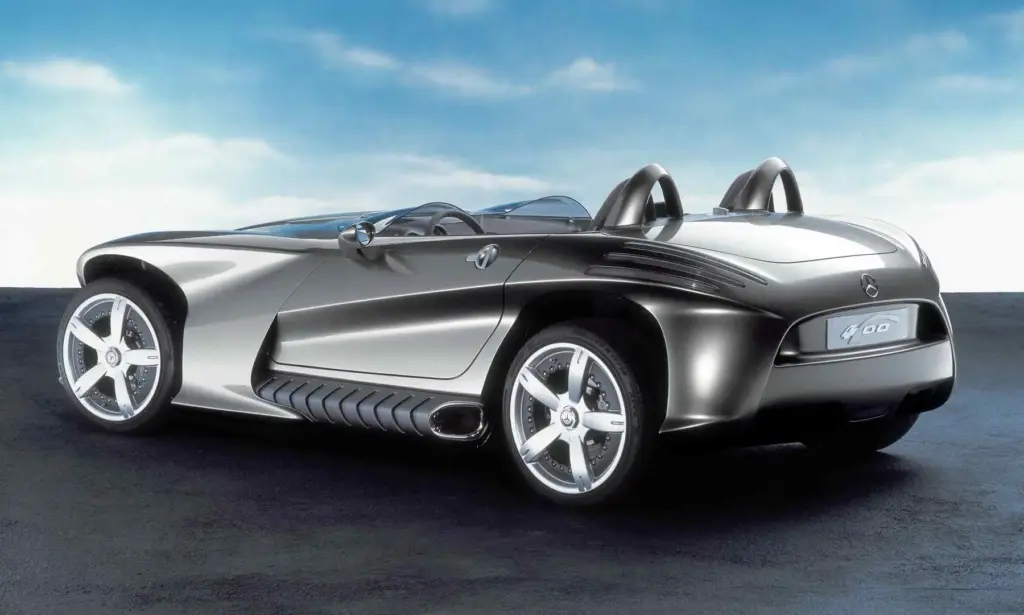
In the latest instalment of our ongoing series outlining Forgotten Concepts, we take a look at a weird creation by Mercedes-Benz that was way ahead of its time.
Mercedes-Benz is celebrating 140 years since the company founder registered the patent for the modern motor car. We covered a bit of that in this article. Any automaker that has been around that long has some interesting creations in its past. The company has produced many weird and wonderful concept cars along the way. The Mercedes-Benz F400 Carving has to be one of the weirdest.
Follow Double Apex on Instagram and Facebook where we share more car content.
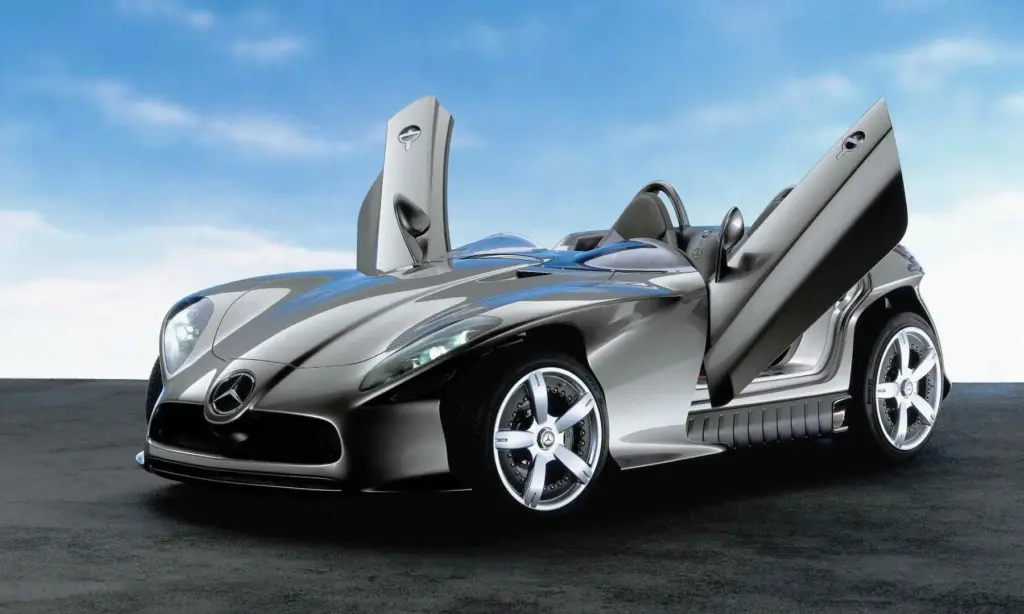
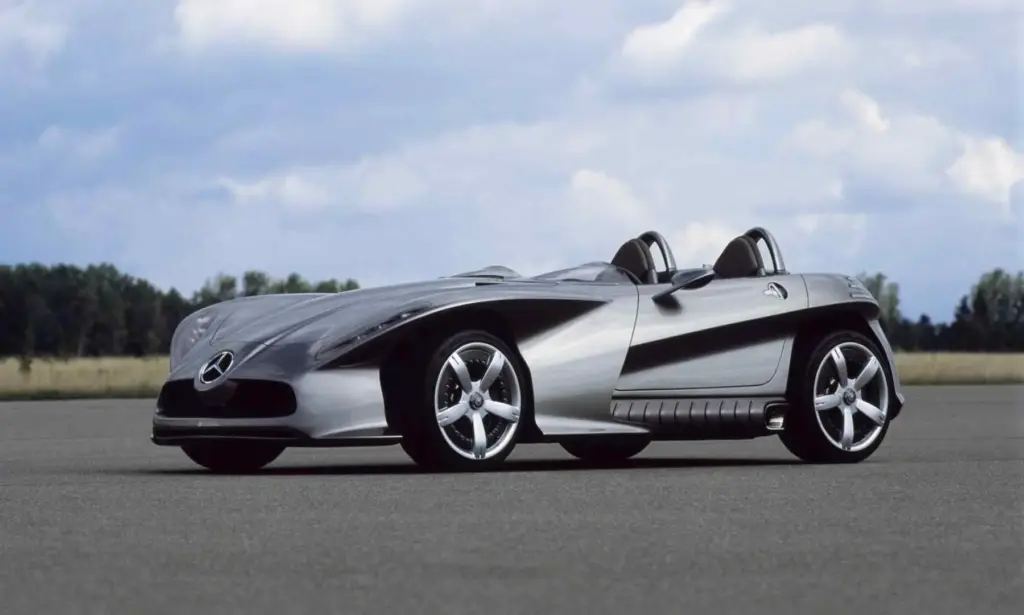
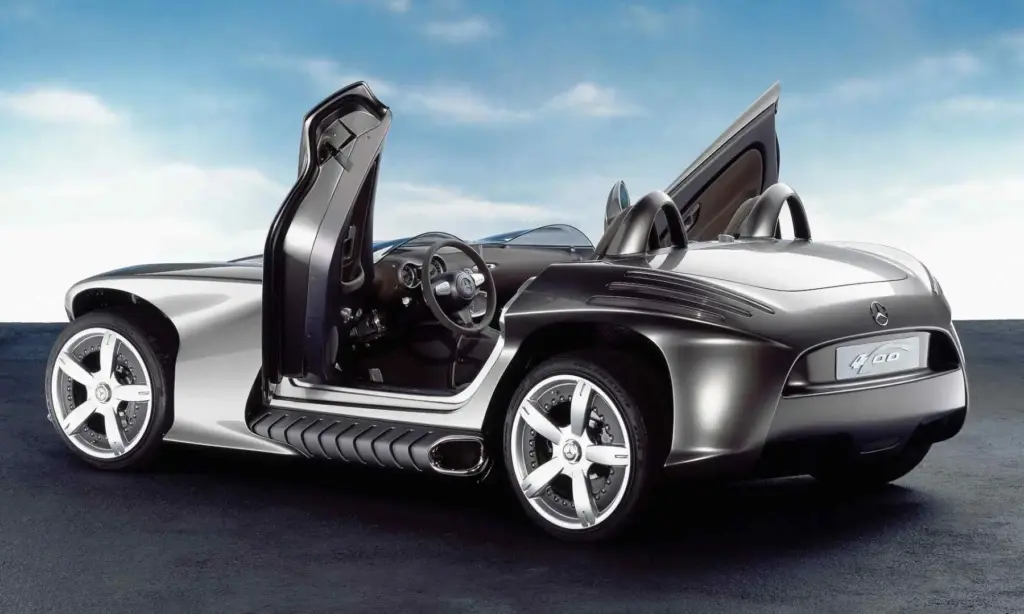
Imagine a car that corners like a pro skier carving down a mountainside; wheels leaning in dramatically to provide extra grip. That’s exactly what the Mercedes-Benz F400 Carving, a 2001 concept car that turned heads at the Tokyo Motor Show did with its wild, wheel-tilting antics. This car was built as a research tool by (then) DaimlerChrysler engineers. The two-seater coupe wasn’t just eye candy; it packed tech that would eventually make it onto production cars.
Star Feature: Wheel-Tilting Wizardry
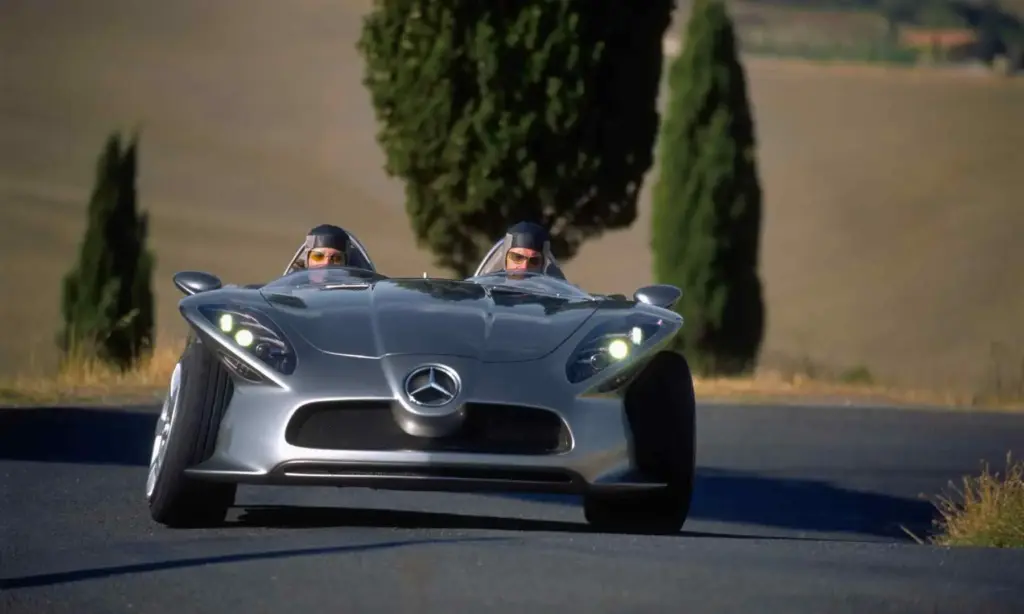
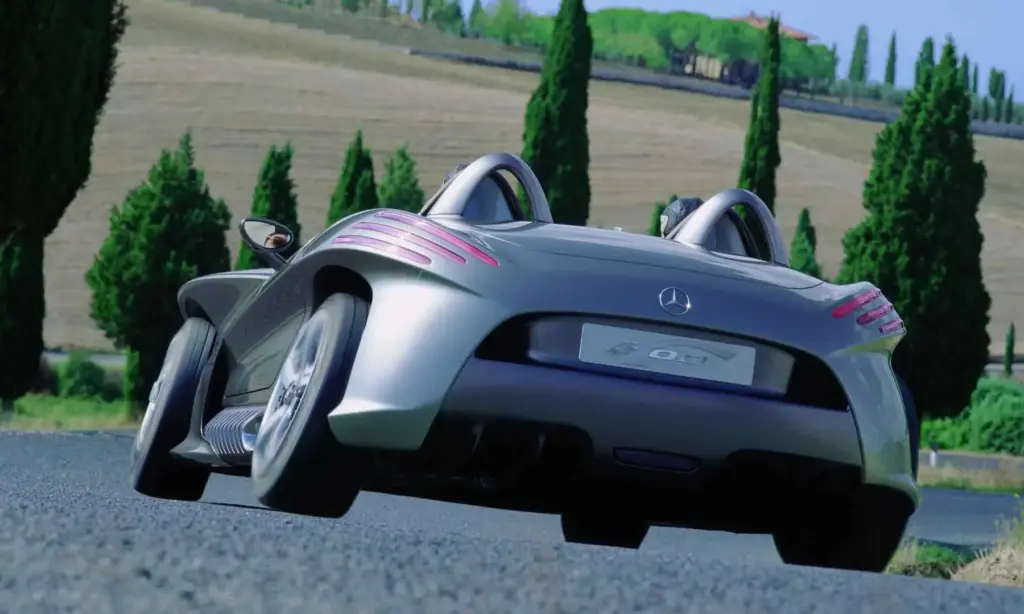
The F400’s party trick was its Active Camber Control system, which could tilt the outer wheels inward by up to 20 degrees during corners. It mimicked a skier leaning for maximum stability as they carved down a mountain; hence the name ‘Carving’. Specially developed asymmetrical tyre boosted lateral acceleration to 1,3 G, or about 30 per cent more than sportscars of the era. A computer monitored steering inputs and road conditions in real-time, adjusting on the fly for maximum cornering fun.
In panic stops, all four wheels tilted outward instantly, slashing braking distance from 100 km/h by over five metres, thanks to enhanced Electronic Stability Program (ESP) integration. This sleek silver beast flaunted wing-like fender flares and a lightweight mix of steel, aluminum, and carbon-fibre.
Tech That Lit Up the Road
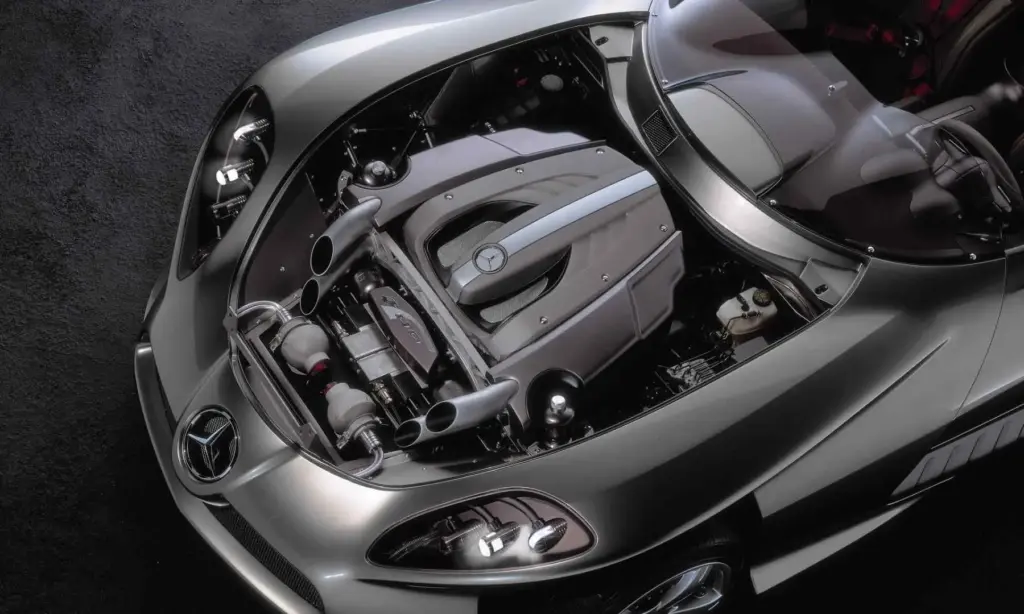
Lighting got a futuristic twist with fiber-optic lines piping xenon light from under the hood to slim headlamps—compact, bright, and space-saving. Side-mounted cornering lamps doubled as fog lights, popping on mid-turn for better visibility, because who doesn’t want drama in the dark? Under the skin, a 42-volt electrical architecture powered the show, hinting at beefier electronics for future rides. Steer-by-wire and brake-by-wire systems ditched mechanical links for electronic precision, letting sensors and actuators react faster than any human twitch—perfect for limit-pushing drives.
Power and Everyday Smarts
At the heart of the F400 was a 3,2-litre V6 pumping about 160 kW that was bolted to a five-speed automatic. Zero-to-100 km/h took about 6,2 seconds, with a top speed electronically capped at 250 km/h. Active Body Control (ABC) suspension scanned the road constantly, optimizing ride height and damping for that perfect balance of plush and planted.

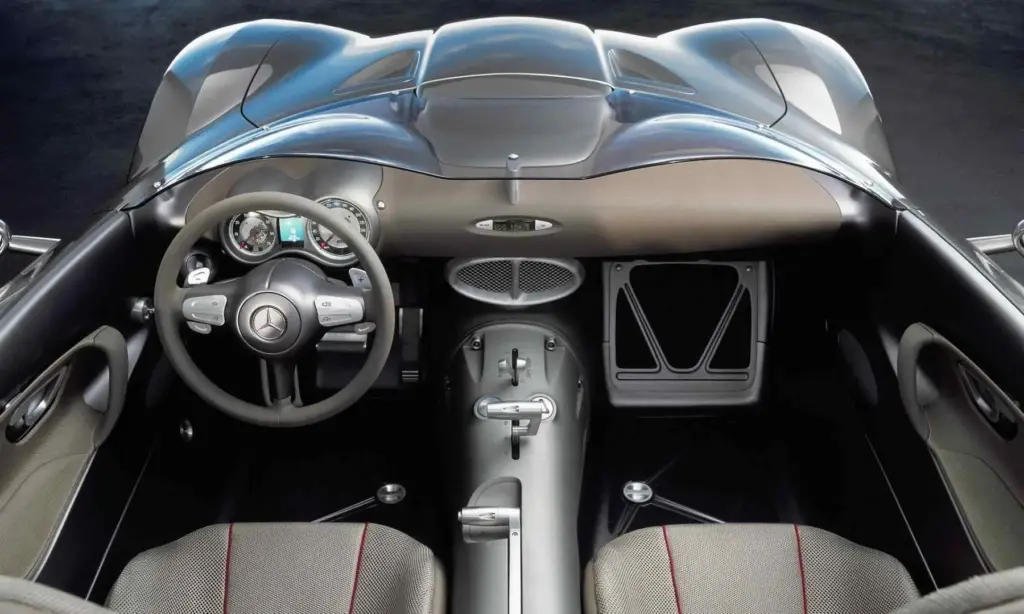
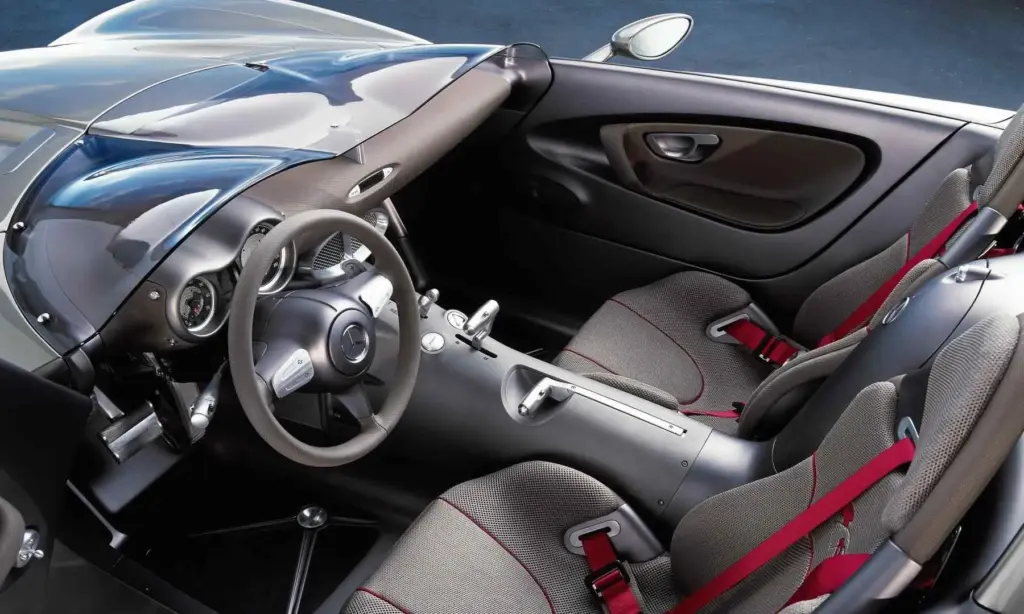
The body of the F4oo was made from carbon-fibre reinforced plastic and the space frame design used steel, aluminium and also carbon-fibre reinforced plastics. Inside, it was minimalist luxury: leather seats, a digital dash, and ski-inspired cues everywhere. No production intentions were announced, but Mercedes called it a showcase for leading-edge safety and dynamics.
Production Legacy: From Concept to Cul-de-Sac
Did any of this wild tech make it to your Mercedes dealer? Sort of, but with a reality-check twist. The fibre-optic lighting evolved into more efficient LED and matrix systems in modern cars such as the S-Class, prioritising compactness without the full fibre flair. Carbon-ceramic brakes, teased here for their fade-free stopping power, later starred on high-end AMG models like the SLS and GT.
ABC suspension influenced later active systems in the SL and CLS, smoothing bumps and hugging curves, but full wheel-tilting never hit roads. Steer-by-wire lives on in prototypes and some luxury flagships, while ESP became standard across Mercedes (and most cars) post-F400. Brake-by-wire? It’s trickling into electrics like the EQS for regenerative wizardry. The camber control system was, sadly, not destined for production. Although, should Mercedes or AMG ever consider producing a Mazda MX-5 rival, it would given them a real USP.
An Exciting Future
Today, in our EV-obsessed world, the F400 feels like a cheeky throwback—a gas-guzzling dreamer that prioritised thrills over efficiency. For enthusiasts, it’s a testament to Mercedes’ mad-scientist side, German engineering let loose. Videos of it carving corners still hypnotise gearheads, wheels banking like a motorcycle on steroids. It reminds us automotive innovation thrives on bold ‘what ifs,’ even if they don’t all stick the landing. Until then, the F400 Carving skis eternally in concept-car Valhalla.
Have your say
Got thoughts on this?
No feedback yet on Forgotten Concepts Part 10: Mercedes-Benz F400 Carving. Kick the conversation off.
Free. Email link only — no password.