


The Lamborghini Miura is often credited with creating the supercar genre. Now that iconic model from Sant’Agata turns 60. The Lamborghini Miura made its public debut at the 1966 Geneva Motor Show and quickly changed the direction of the performance-car market. Automobili Lamborghini had been founded only in 1963, and its first production model, the 350 GT, appeared in 1964.
By 1966, the company was already presenting a very different kind of car: a low-slung two-seat machine with a 4,0-litre V12 mounted transversely behind the cabin and bodywork by Bertone. Lamborghini’s own historical record describes the Miura as the model that established the marque as a supercar maker.
Follow Double Apex on Instagram and Facebook where we share more car content.
The Lamborghini Miura is certainly not only a dream car for me because of its performance, design, and cult status. The Miura did more than introduce a new car—it changed the course of automotive history. With its revolutionary architecture, breathtaking design, and uncompromising performance, it defined the very concept of the supercar and set Lamborghini on a path of fearless innovation. The Miura embodies our DNA: bold, visionary, and always ahead of its time. As we celebrate this anniversary, we honor a masterpiece that continues to inspire us—not by looking back, but by reminding us that true innovation is born from the courage to challenge conventions
– Stephan Winkelmann, president and CEO of Automobili Lamborghini SpA
Buy now and take advantage of free delivery in South Africa on orders over R349.
An Early Glimpse
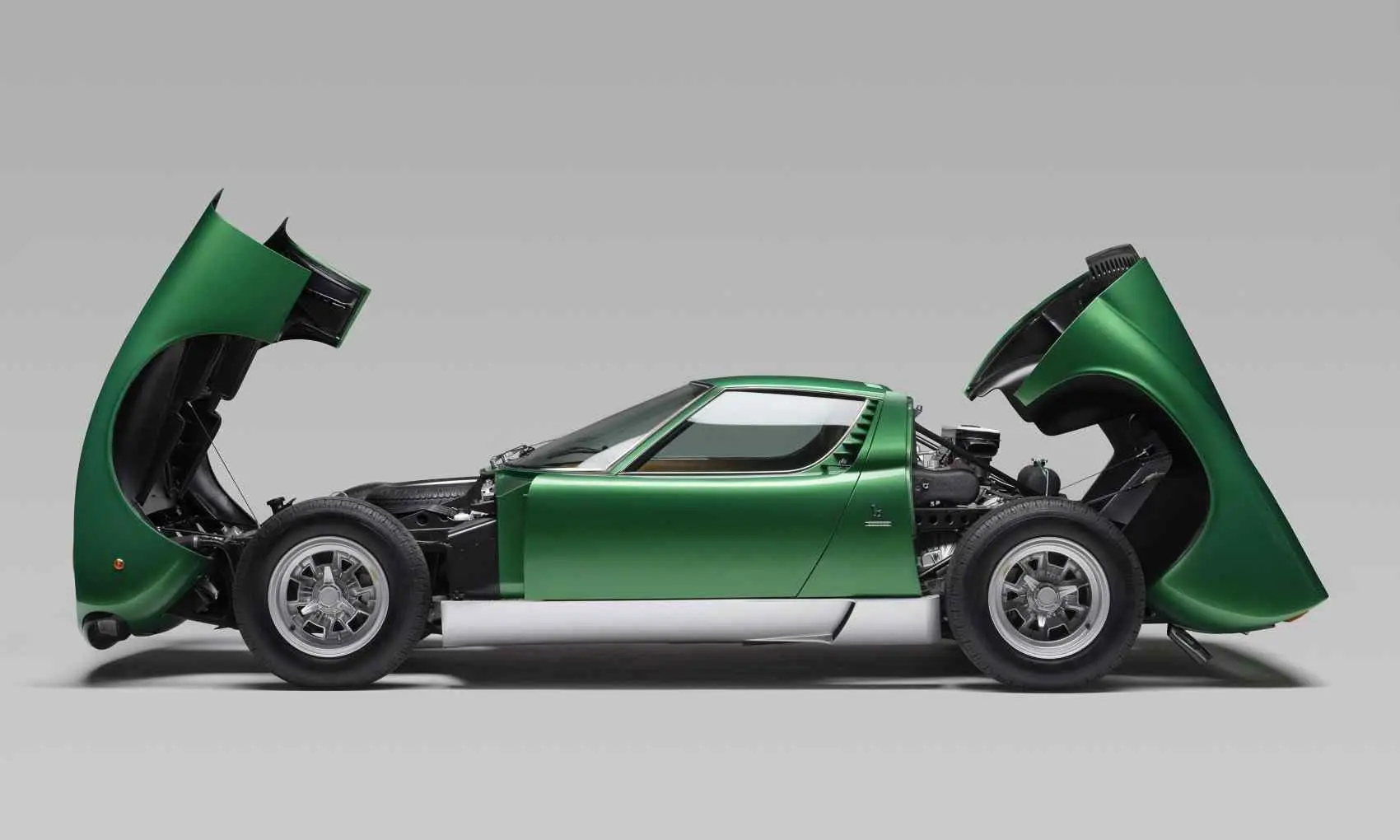
The idea started before the finished car appeared in Geneva. In November 1965, Lamborghini showed abare P400 monococoque at the Turin Motor Show. It was displayed in satin black with four white exhaust pipes and a transversely mounted V12. The project was driven by Giampaolo Dallara, Paolo Stanzani and test driver Bob Wallace. The platform weighed about 120 kg, and featured independent double-wishbone suspension and Girling disc brakes. It drew heavy attention because it looked more like a racing-car underneath than the basis for a road-going GT.
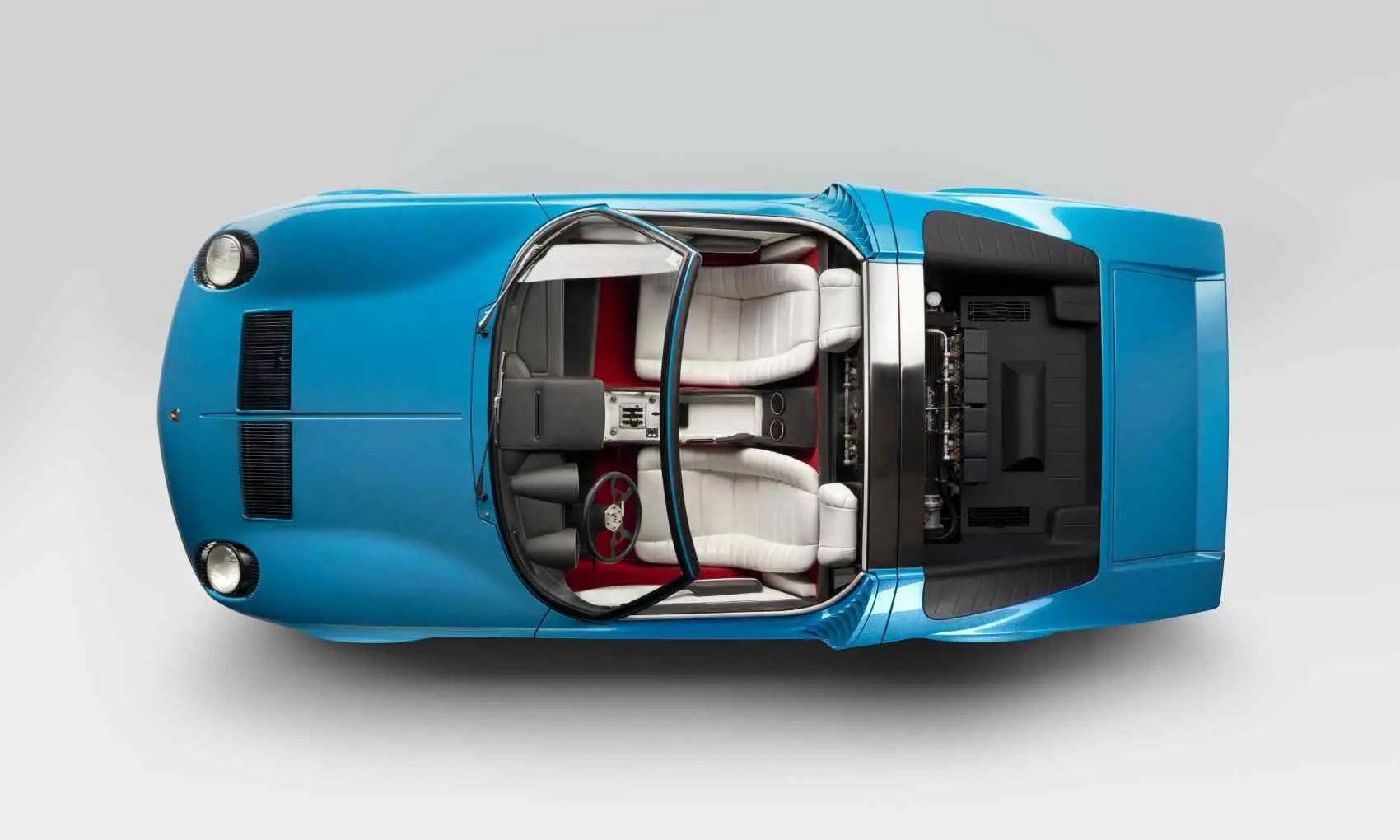
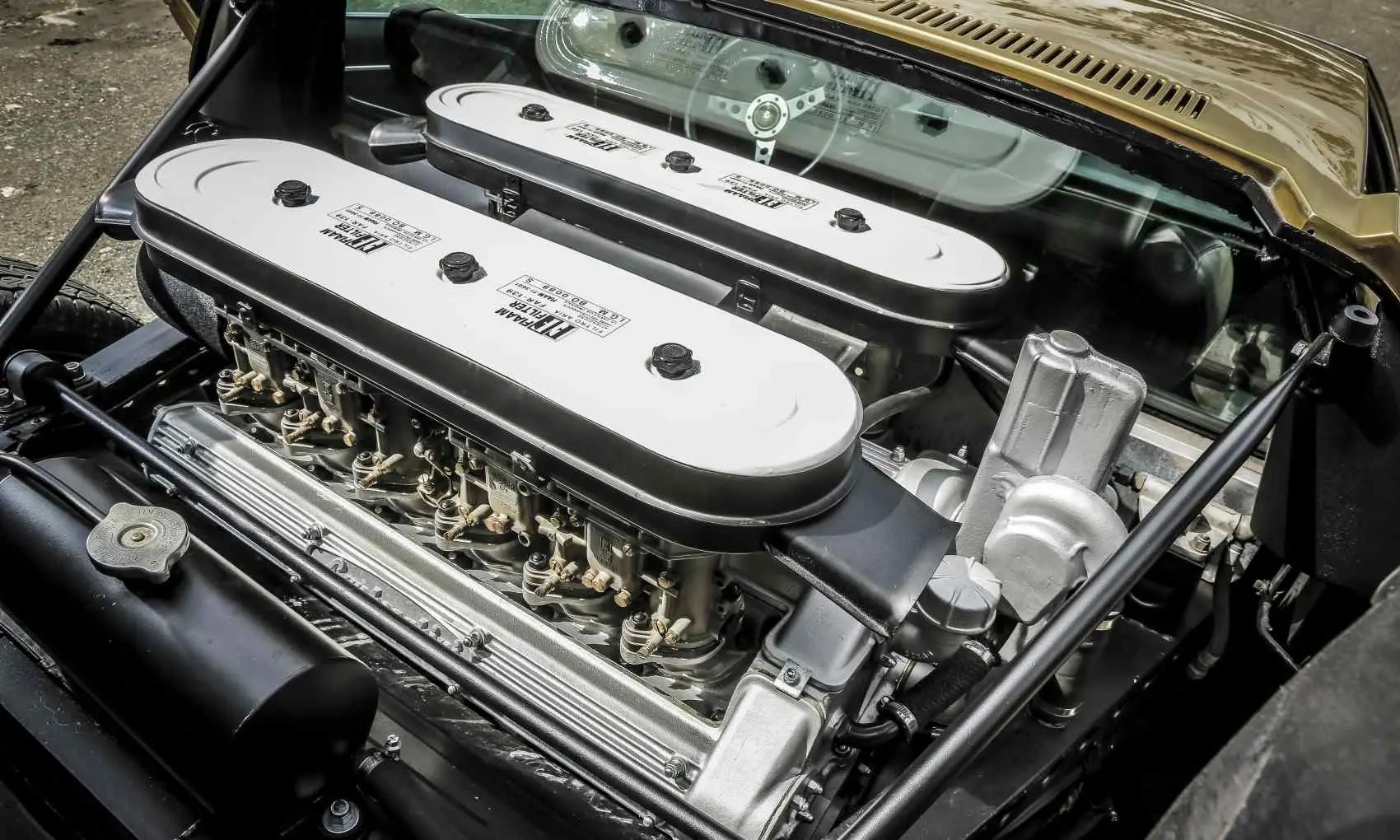
That layout was the Miura’s key technical statement. Lamborghini says the rear transverse V12 was derived from competition thinking and packaged with the gearbox in a single casting to save space. In P400 form, the 3 929 cm³ V12 produced 258 kW (350 hp). The later Miura S raised output to 272 kW (370 hp), and the final SV took it to 283 kW (385 hp). The SV also introduced wider rear tyres, revised suspension and separate lubrication for the engine and gearbox, replacing the earlier shared system.
Shaping an Icon
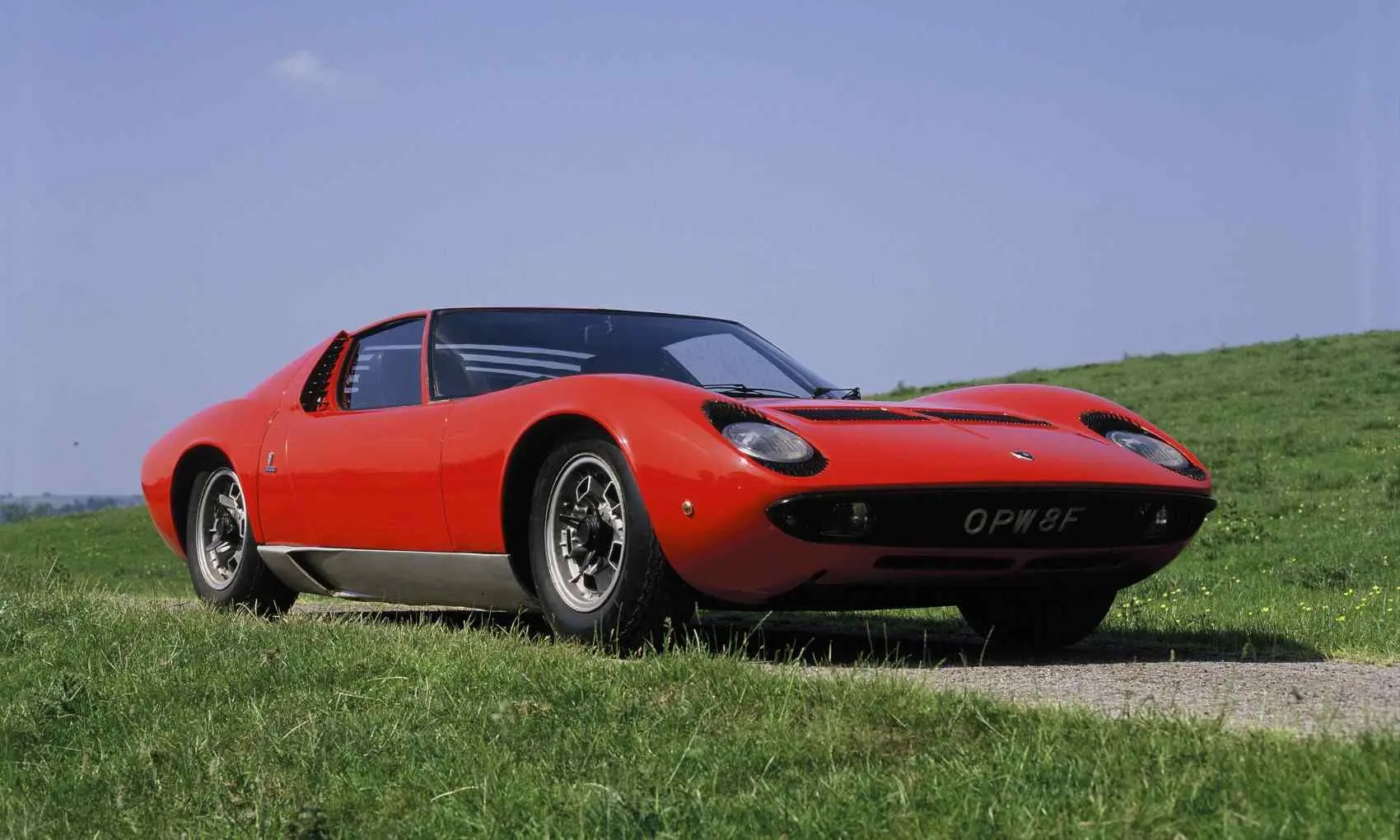
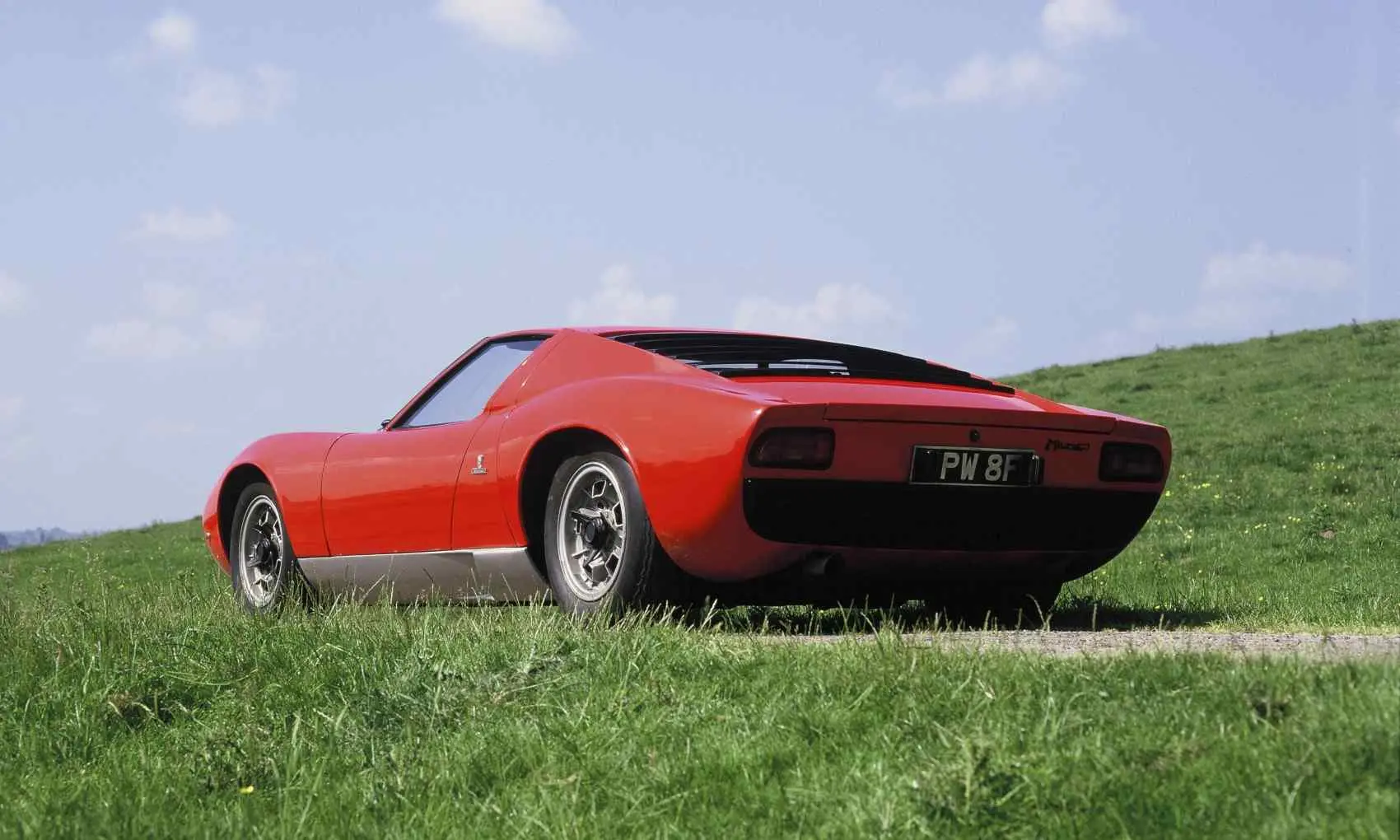
Once the engineering package was set, Bertone shaped the body. Lamborghini credits Carrozzeria Bertone for the Miura’s long, low front, louvred rear section and the distinctive ‘eyelash’ trim around the headlights on early cars. The roofline sat about 110 cm from the ground, helping to give the Miura its unusually low stance. The design was completed rapidly after the Turin show and the finished car appeared at Geneva in March 1966. Orders followed immediately, surprising both Ferruccio Lamborghini and Nuccio Bertone.
Creating a Tradition
The Miura name came from the famous Spanish fighting bull breed, beginning Lamborghini’s long-running habit of using bull-related names for its cars. The badge also carried internal meaning: P400 referred to the rear engine position and the car’s 4,0-litre displacement. That made the Miura important not only as a product, but as the point where the company’s naming and identity started to take a more recognisable form.
Fearsome Reputation
Performance was central to its reputation. Lamborghini states that the Miura became the fastest production car in the world when it arrived in 1966. The P400 could reach 280 km/h, while later versions pushed output and top speed further. Just as important was the format: a road car built around a mid-mounted V12 concept associated more closely with racing machinery than with grand tourers of the mid-1960s. That combination helped establish the template later followed by cars such as the Countach, Diablo, Murciélago, Aventador and Revuelto.
Its influence extended beyond engineering. Lamborghini says journalists coined the word ‘supercar’ to describe the Miura, and the company still positions it as the car that created a new category. The model also became a fixture in popular culture. According to Lamborghini, Miuras have appeared in 43 films, with the best-known screen role being the opening sequence of The Italian Job in 1969.
Celebrating an Icon
Sixty years after its debut, the Miura remains one of the key cars in Lamborghini history because it compressed several major shifts into one model: a new engine layout, a new design language and a new idea of what an exotic road car could be. Lamborghini has marked the anniversary with a full year of Miura celebrations in 2026 and an official Polo Storico tour. The Miura was not Lamborghini’s first car, but it was the car that defined the company’s future.

Have your say
Got thoughts on this?
No feedback yet on Lamborghini Miura – the First Supercar Turns 60 [w/video]. Kick the conversation off.
Free. Email link only — no password.