
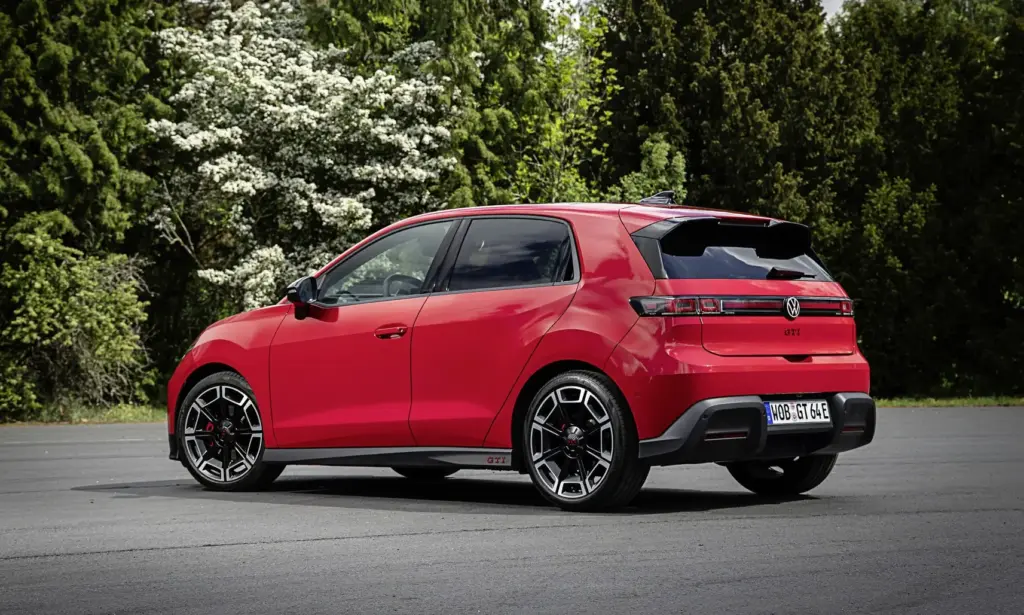


Volkswagen has taken the GTI badge somewhere the nameplate has never been before. The new ID. Polo GTI arrives as the first fully electric car to wear those three letters, yet the recipe remains familiar. Front-wheel drive, sharp suspension set-up tuning, everyday usability, and the sort of visual restraint that still lets the car look like it belongs in a queue outside a Gauteng coffee shop or parked in the pits at Kyalami.
The timing is fitting too. Volkswagen chose the Nürburgring 24 Hour race for the reveal, which feels entirely on brand for a car that is meant to carry the GTI torch into the electric age. It is still a near-production concept rather than a showroom-fresh reality, but the message is clear. The GTI badge is being recast for batteries, software and instant torque without losing the front-drive attitude that made the original such a touchstone.
The electric GTI formula
Volkswagen says the ID. Polo GTI develops 166 kW and 290 N.m, with all of that available in a way that should make it feel eager from the first squeeze of the throttle. The claimed 0 to 100 km/h time is 6,8 seconds, and top speed is quoted at 175 km/h. On paper, that puts it slightly behind the last combustion Polo GTI, which managed the sprint in 6,5 seconds, but straight-line bragging rights have never been the whole GTI story.
The important part is the hardware underneath. Power still goes to the front axle, just as it did in the first Golf GTI back in 1976, and Volkswagen has fitted an electronically controlled front differential lock as standard. That is paired with adaptive DCC sports suspension and progressive steering developed specifically for the GTI. If the brief is to make a small electric car feel alert and tied-down rather than numb and over-assisted, those are the right ingredients.
Volkswagen also gives the driver a GTI mode through a button on the steering wheel. One press sharpens motor response, steering weight and suspension behaviour, while the cockpit graphics switch to a dedicated sport theme. It is a neat way of acknowledging that the car will spend most of its life in traffic, on the school run or commuting, while still promising a bit of theatre when the road opens up.
The battery pack has 52 kWh net capacity, and Volkswagen quotes up to 424 km on the WLTP cycle, along with DC charging at up to 105 kW. The charging curve is said to stay fairly constant, which matters as much as peak charging power when you are planning a quick top-up rather than a full session. From 10 to 80 per cent, the battery can be replenished in about 24 minutes.
The old GTI cues are still there
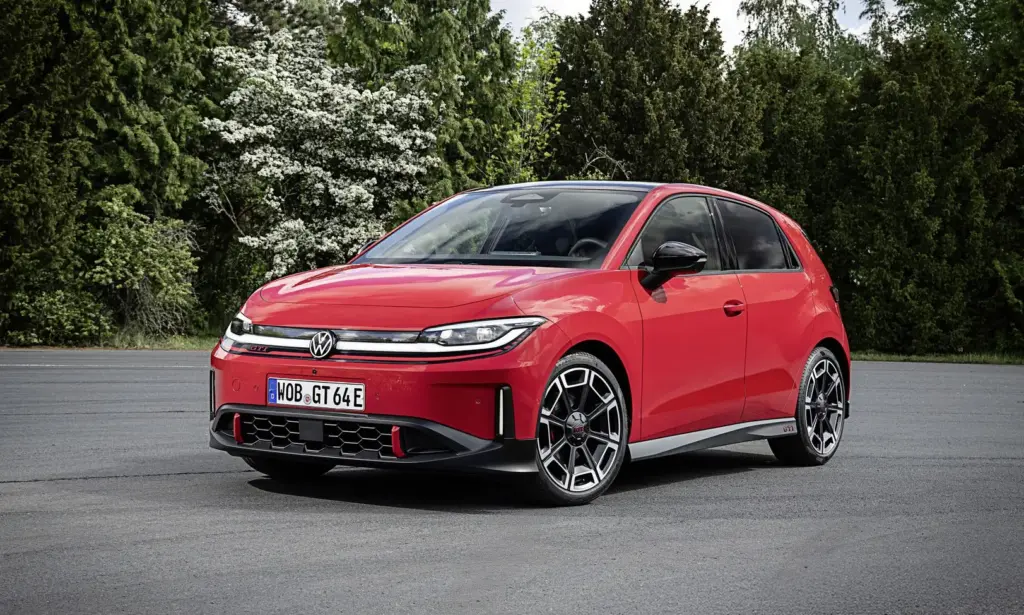
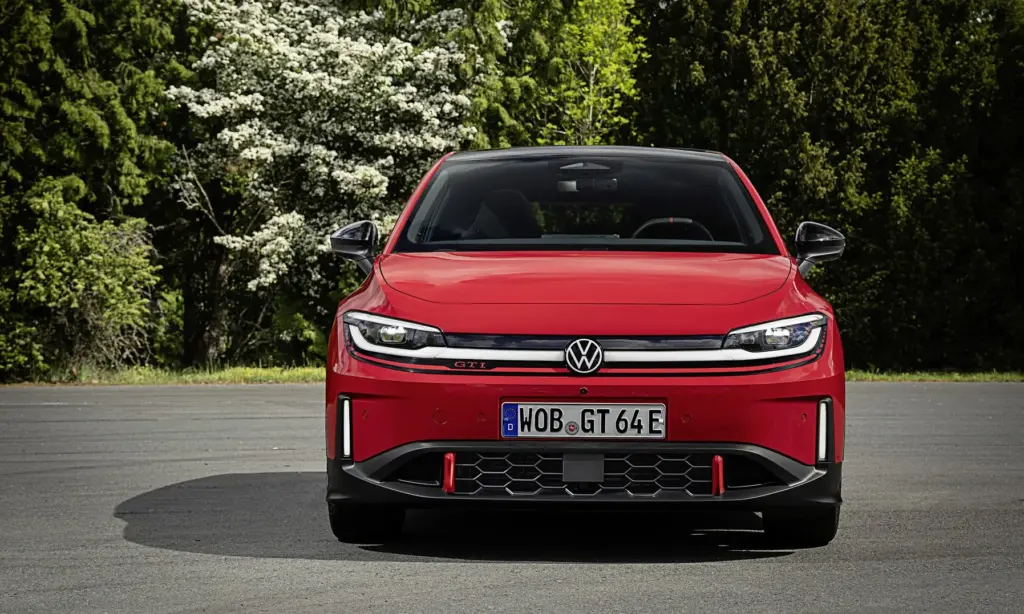
The ID. Polo GTI does not hide its family tree. The front end carries the classic red stripe, stretched almost across the entire nose, with a 3D GTI badge set to one side. Above that sit an LED light strip, an illuminated VW emblem and IQ.Light matrix headlamps arranged in a clean horizontal line. Lower down, the honeycomb intake treatment brings the expected hot hatch aggression, while red-painted vertical elements at the outer edges echo motor-racing tow eyes.
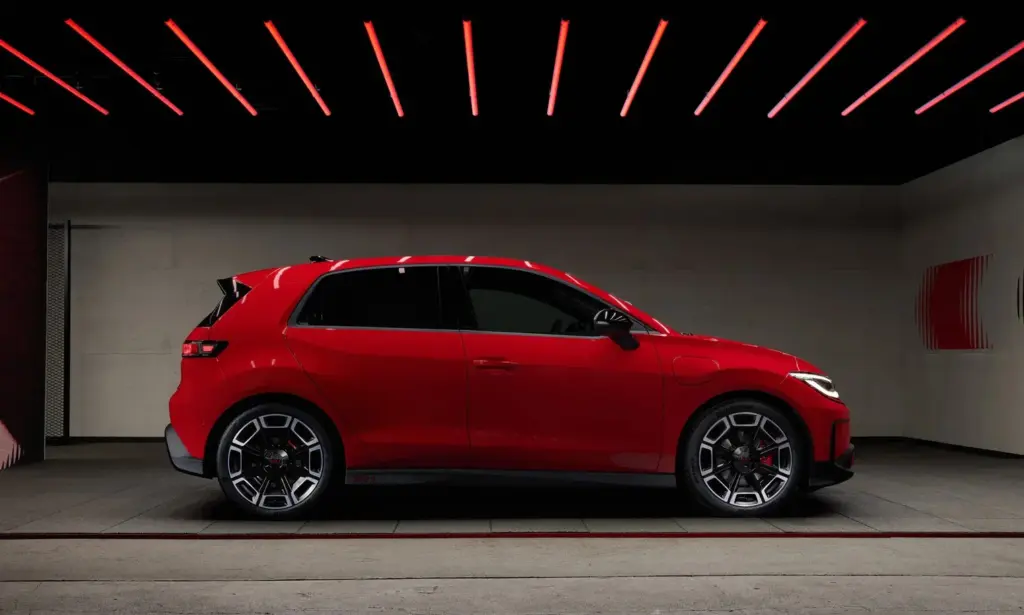
In profile, the C-pillar borrows its shape from the first Golf, which is a deliberate nod rather than a lazy retro exercise, and the straight window line gives the body a planted look. Standard 19-inch alloys fill the arches, and the rear spoiler is split into two sections, helping the car read as a GTI even before you notice the badges.
The rear lighting follows the same playbook. The IQ.Light tail clusters use two outer three-dimensional LED elements each, with illuminated red sections around the VW logo. The black diffuser is neatly integrated into the rear bumper. The oeverall aesthetic should age better than a trend-chasing EV crossover.
Big screens, more space, and a practical edge
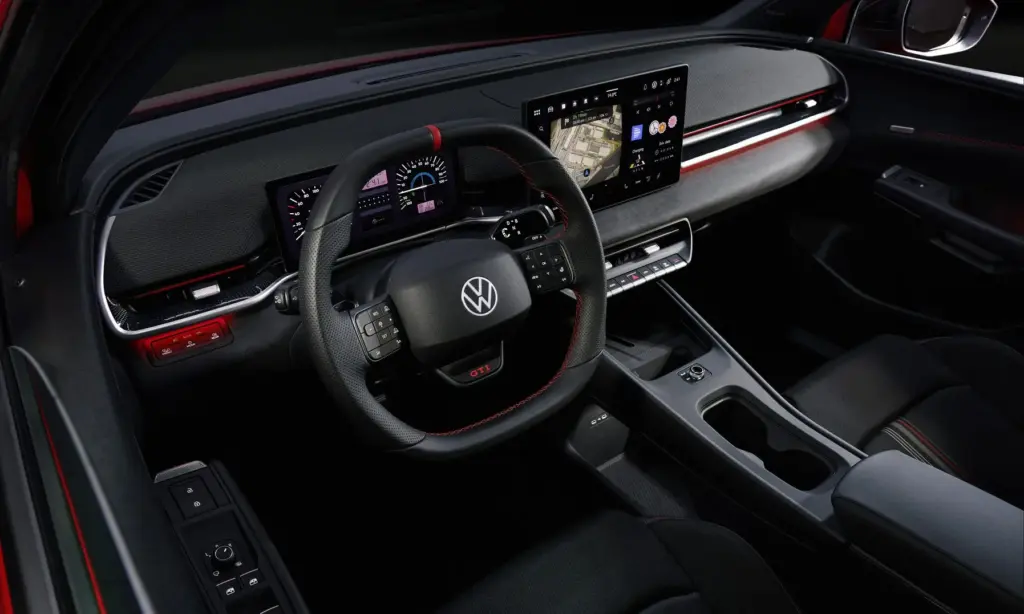
Inside, the cabin goes heavy on red and black, as it should. Red stitching runs across the steering wheel, dash, doors and sports seats, while the seat inserts use a fabric that reinterprets the old tartan look familiar to anyone who knows the lineage. The front sports seats carry integrated head restraints with illuminated GTI logos, and the steering wheel gets its own illuminated badge, plus paddles for recuperation adjustment. Volkswagen has even kept the 12 o’clock marker on the wheel, a small motorsport reference that enthusiasts will clock immediately.
The dashboard is built around two displays on one visual line, a 26 cm Digital Cockpit and a 32,77 cm infotainment screen. Both can switch to a retro display mode inspired by the Golf I, right down to cassette-style track graphics. It sounds playful, but it also makes the point that Volkswagen is not trying to sever the GTI badge from its history.
Space is another area where the electric platform pays dividends. Volkswagen calls the ID. Polo GTI a space miracle, and the claim is not empty marketing. Compared with the Polo GTI on the MQB combustion platform, there is 19 mm more interior room, along with extra width and headroom. Boot volume rises from 351 to 441 litres, and with the rear backrests folded, capacity grows to 1 240 litres. For a compact performance car, that is proper usable space.
Volkswagen has not announced South African pricing or timing, and the German market starting point is just under €39 000 euros. For now, the ID. Polo GTI stands as an important marker for the badge. It keeps the front-drive layout, keeps the name, and keeps the driver at the centre of the experience. The powertrain has changed, but the brief remains recognisably GTI.

Have your say
Got thoughts on this?
No feedback yet on Volkswagen’s all-electric ID. Polo GTI Redefines the Iconic Badge. Kick the conversation off.
Free. Email link only — no password.