
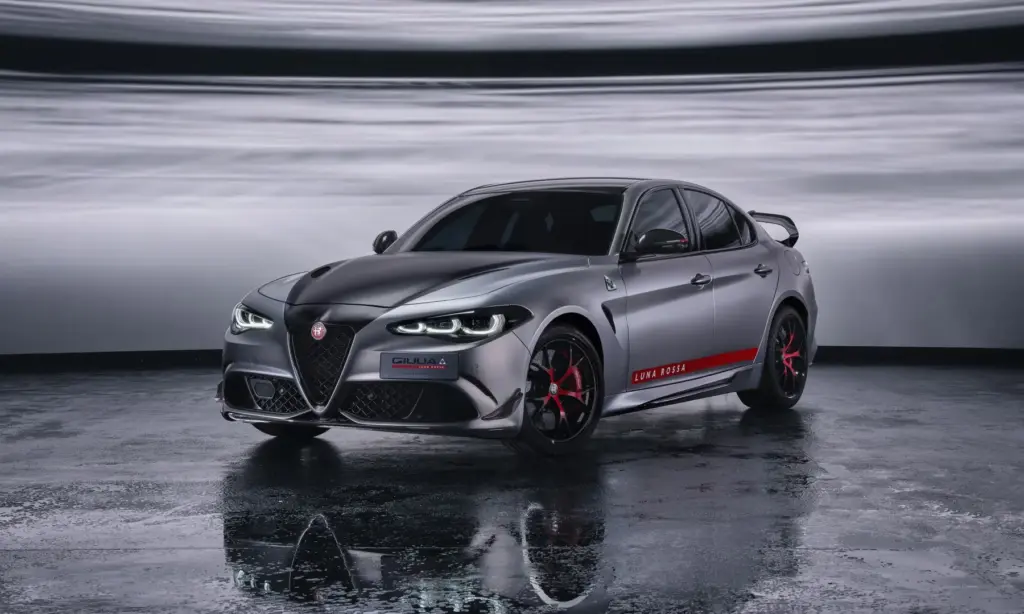
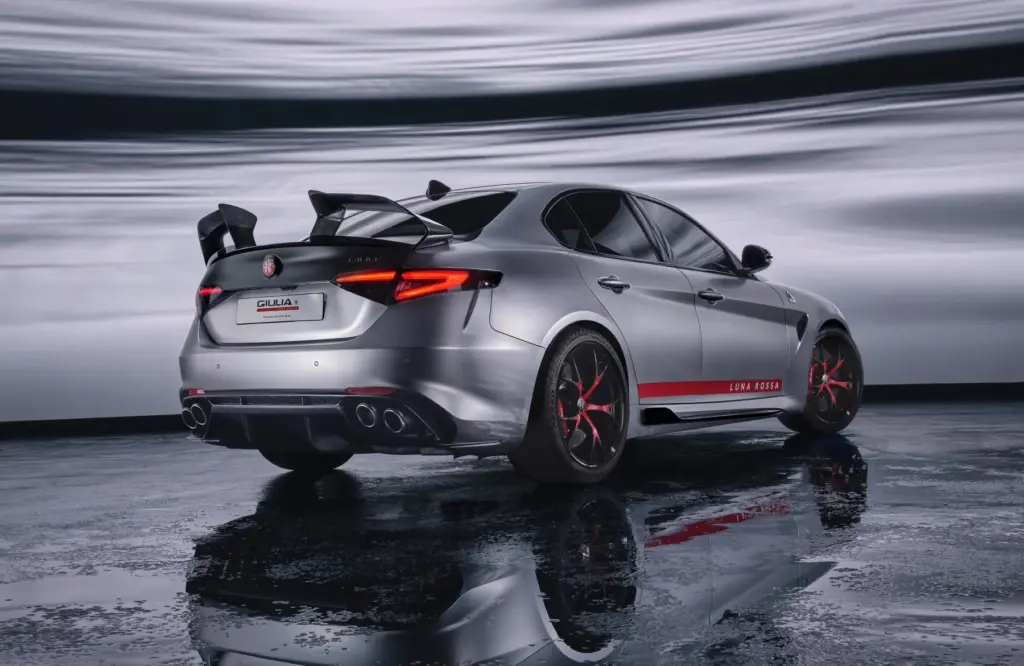
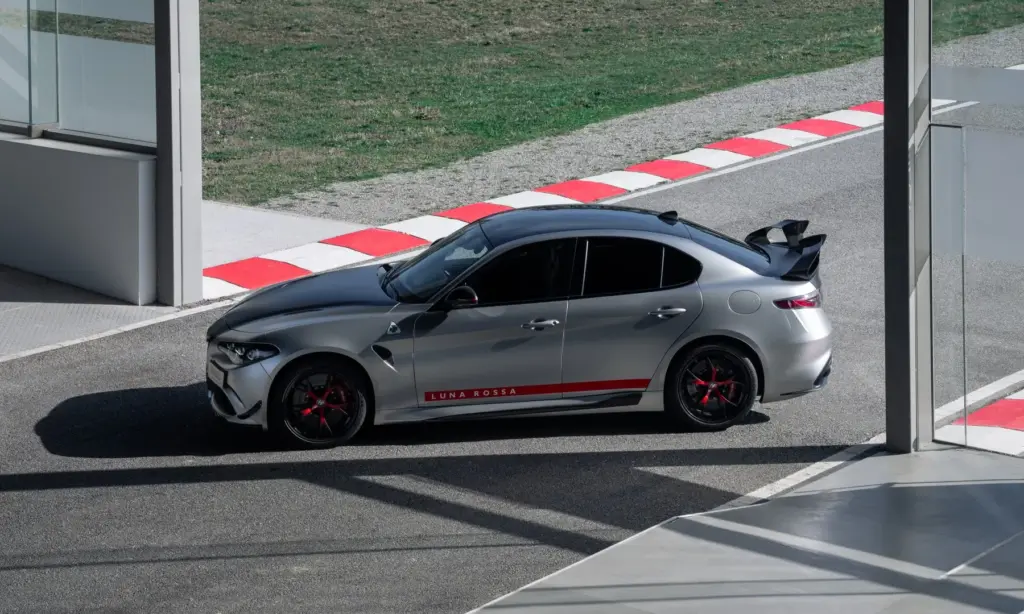


Alfa Romeo has taken the Giulia Quadrifoglio and pushed it into a rarer, sharper corner of the map. The Luna Rossa special edition is the sort of car that makes sense only when you remember who built it, who it was built with, and why anyone would bother making a four-door saloon look like it spent time in a wind tunnel with a yacht crew.
Extremely Limited
Only ten will exist, all are already spoken for, and the headline figure is not paint or trim but aero. Alfa Romeo says this is the most extreme Giulia Quadrifoglio it has ever made, with a carbon-fibre package that adds serious downforce without turning the car into a winged monster. That balance matters. A fast road car that simply piles on drag is just making noise for the gallery. This one is aimed at the kind of grip, stability and corner-speed gains you can feel from the first loaded right-hander.
A Giulia built like a yacht’s shadow
The link to Luna Rossa is not some lazy badge swap. Alfa Romeo has treated the sailing team’s AC75 campaign boat as a design and engineering reference point, then built the car through BottegaFouroserie, the new customisation and performance hub shared with Maserati. The Giulia Quadrifoglio Luna Rossa started life as a production car, then went through an artisan conversion with selected Italian partners. That gives the whole project a more handcrafted flavour than the usual limited-run marketing exercise.
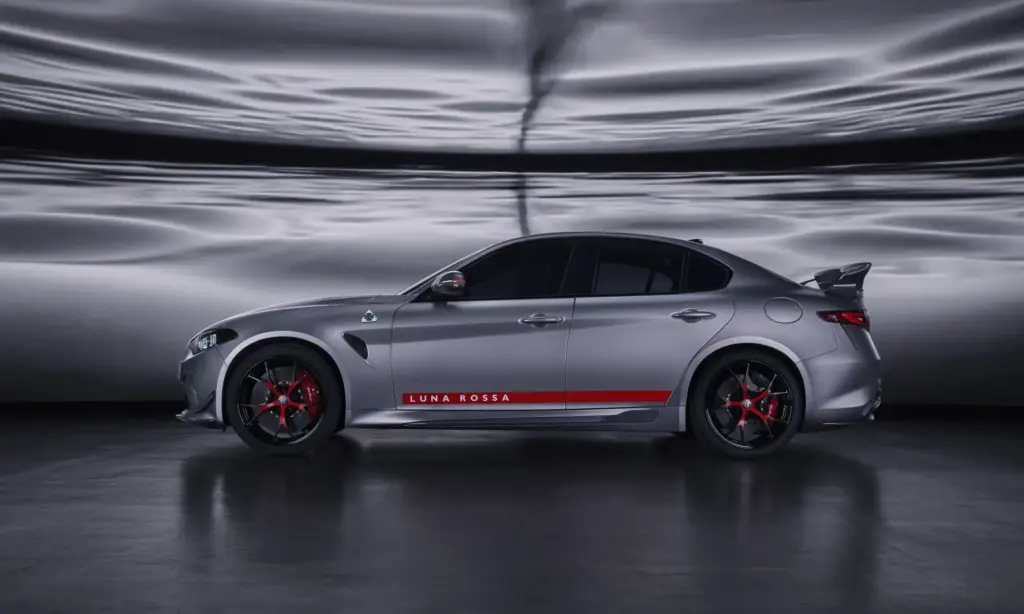
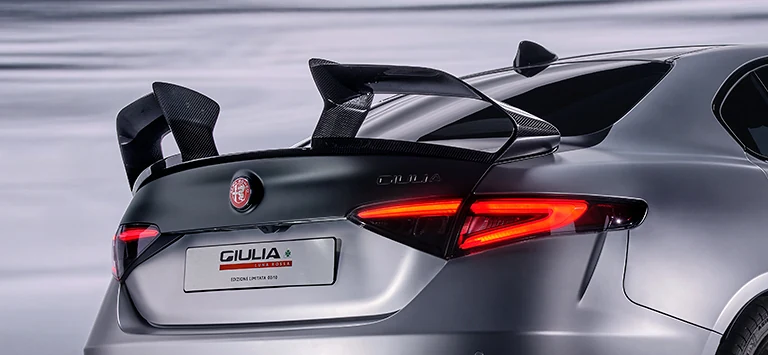
The aero kit is where the car earns its keep. Up front, the additional side appendages increase load on the nose. Underneath, new profiles create suction, using the floor to work harder at speed. Carbon side skirts help seal airflow under the body, keeping the underfloor effect alive instead of letting it leak away. At the back sits the most obvious cue, a dual-profile wing mounted on two central pylons. Alfa Romeo says it was inspired by the Luna Rossa AC75 foils, but turned upside down for automotive use, so instead of lifting the car, it plants it into the road.
The result is not just a visual trick. Alfa Romeo claims the package generates up to five times the downforce of the standard production Giulia Quadrifoglio, while still being efficient enough to allow a 300 km/h top speed. At that speed the car is said to produce 140 kg of downforce, with the balance held at 40% front.
The details are doing real work
The Giulia’s bodywork wears the Luna Rossa story in a way that should make any petrolhead stop and look twice. There is hand-painted iridescent paint inspired by the AC75’s Barcelona colours, plus a two-tone treatment with a red side band and Luna Rossa script. On some of the ten cars, Alfa Romeo has gone further with a black bonnet, roof and rear section contrasted against grey.
The first-ever Alfa Romeo badges on a red background are the kind of detail that sounds small until you see it in the metal. The 19-inch wheels are also painted red on their inner surfaces, while the roof, shield and mirror caps are exposed carbon fibre. It all ties back to the same idea, lightness, tension and a bit of visual theatre without drifting into caricature.
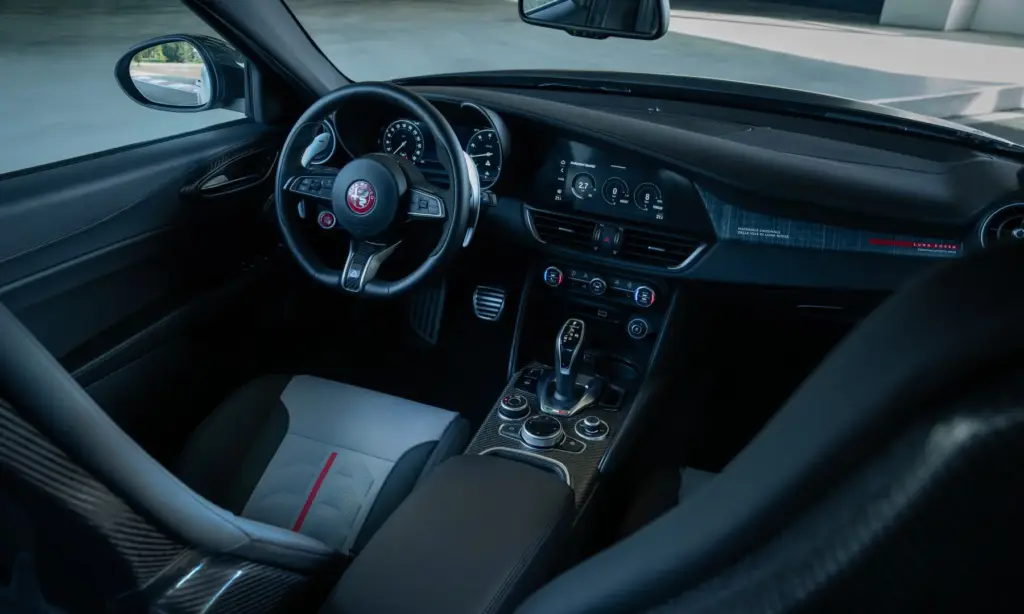
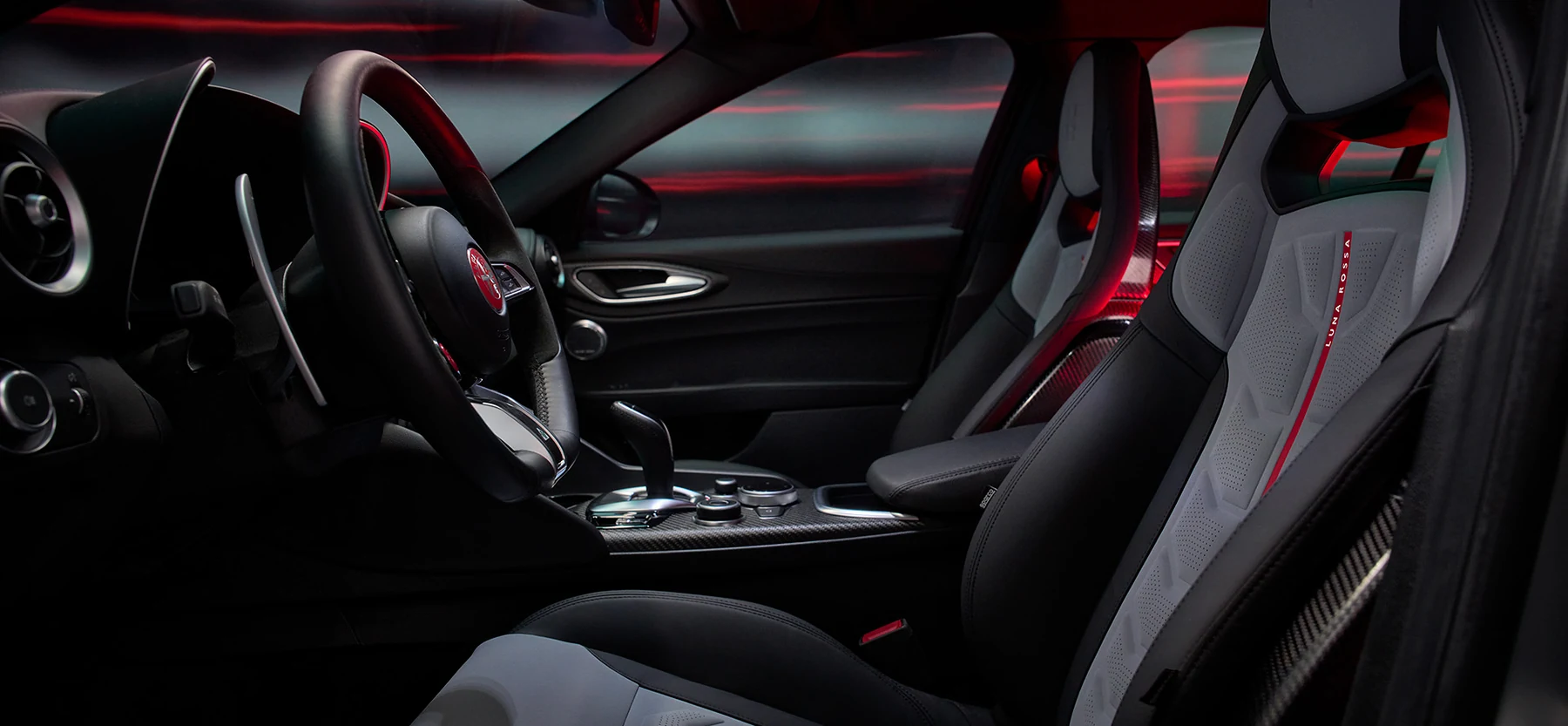
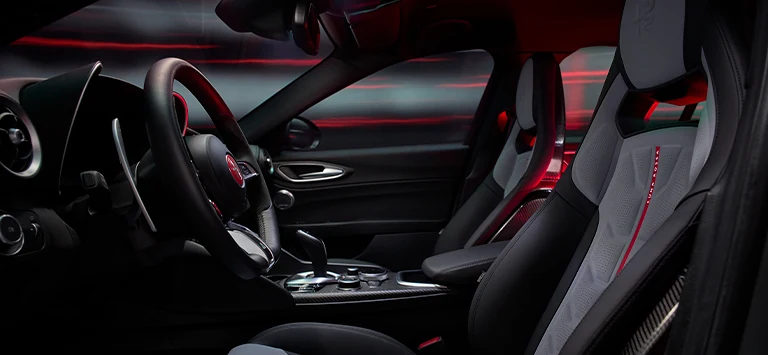
Inside, the cabin is just as specific. Sparco seats use upholstery inspired by the Luna Rossa crew’s Personal Flotation Devices, which is a nicely odd and entirely appropriate reference point. The dashboard carries a wafer-thin film taken from an original Luna Rossa sail, while carbon-fibre trim stretches across the central tunnel and seat shells. Even the Luna Rossa logo gets placed where you will actually notice it instead of being buried under the sort of nonsense that normally accompanies special editions.
The 383-hp twin-turbo 2,9-litre V6 is the engine Alfa Romeo fans already know, but here it is paired with a mechanical self-locking differential and the aero work to match. That combo should improve torque transfer, stability and the ability to carry speed through a corner. In plain terms, the car is trying to put all of its power down with less drama and more precision. That is the useful kind of extreme.
Balocco is the right place for it
Alfa Romeo says the only venue used for the development tests was Balocco Proving Ground, the brand’s long-serving performance base since 1962. That matters because Balocco is not some rented stage for a press launch. It is where Alfa Romeo has historically worked on its quickest racing and competition projects, including F1, DTM and Super Turismo programs.
The company says the track running helped turn the computational aero work into actual driving feel. That is the important part. It is one thing to model vortices and airflow on a screen, quite another to make a car feel planted, intuitive and fast when the steering loads up and the rear wing starts earning its keep. Alfa Romeo even produced an emotive film of the car in what it calls its natural habitat, which in this case is exactly right. A Giulia like this belongs on circuit tarmac, not outside a hotel in pastel light.
The Luna Rossa edition is also the first tangible product of Alfa Romeo’s partnership with the sailing team, ahead of their joint push for the 38th America’s Cup in the Bay of Naples. That is the strategic angle behind all the carbon and colour. It is a statement that Alfa Romeo still understands the appeal of making a road car feel like a piece of competition hardware.
The car will also be shown at the Luna Rossa base in Cagliari during the Preliminary Regatta Sardinia, which opens on 22 May and runs to 24 May in the Golfo degli Angeli. For the team, it is part of the climb towards Naples 2027. For Alfa Romeo, it is a reminder that the Quadrifoglio badge still has room to get a lot more serious.




Have your say
Got thoughts on this?
No feedback yet on Alfa Romeo’s Luna Rossa Giulia Pushes Quadrifoglio Aerodynamics to the…. Kick the conversation off.
Free. Email link only — no password.