



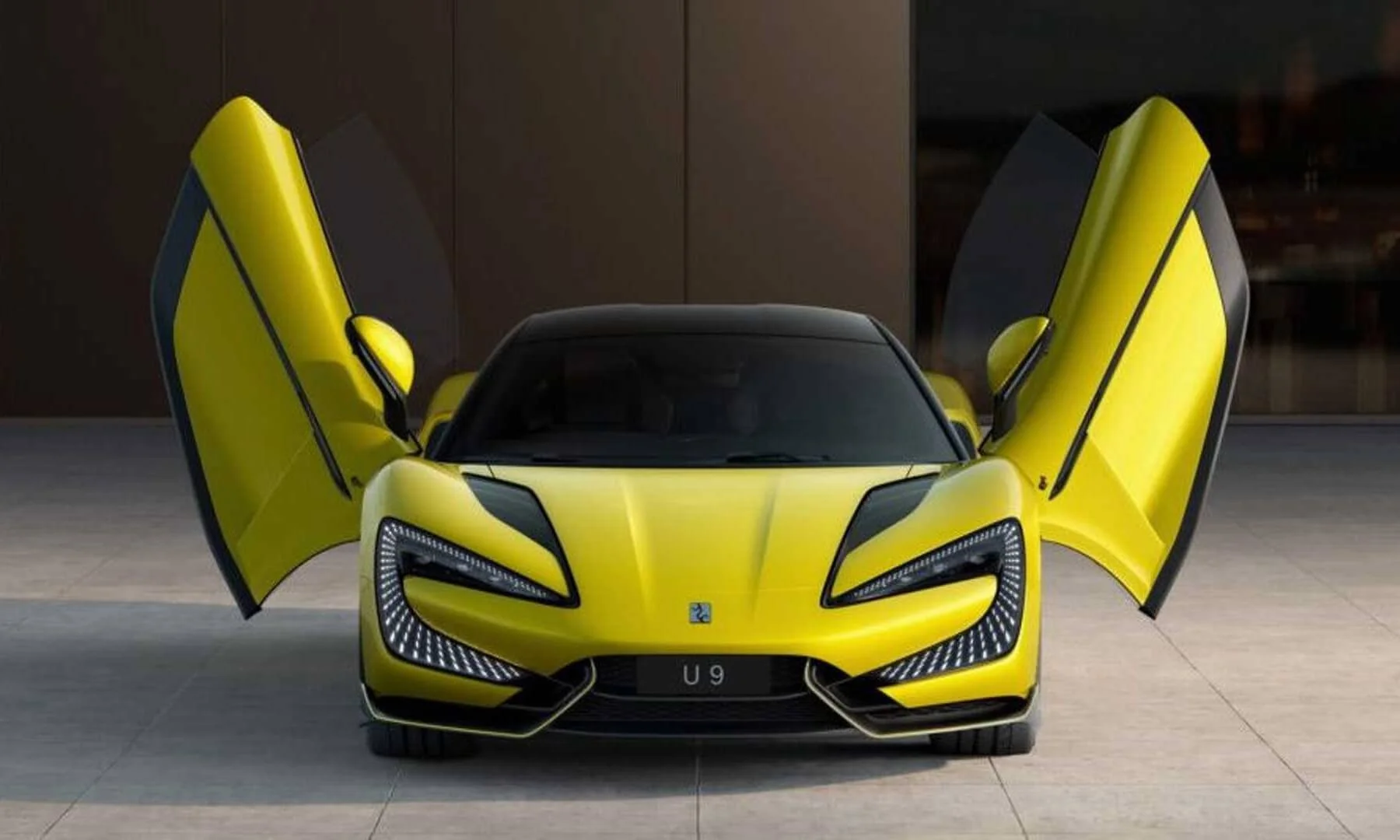
A Chinese electric hypercar selling for more than R40 million in South Africa sounds like the kind of pub talk that usually ends with a laugh. The BYD U9 Xtreme has made that conversation real, though, because it has pushed Yangwang far beyond the usual EV buyer’s notebook and straight into the territory occupied by the rarest names in motoring.
For BYD, the U9 Xtreme is a statement piece with a price to match. The $2,76m transaction at the Beijing Auto Show translates to roughly R49 million at current exchange rates, before local taxes, duties and any importer’s margin. Even if a South African car buyer saw a far more modest landed figure, the number would still sit in a bracket where Ferrari, Lamborghini, McLaren and Rimac are the relevant comparisons, not the BYD Dolphin and Seal crowd.
A hypercar wearing a BYD badge
Yangwang exists so BYD can show its sharpest hand in public. The brand is built for the kind of buyer who wants exclusivity first and volume never, and the U9 Xtreme is the clearest expression of that plan yet. Limited to just 30 examples globally, it is not a compliance exercise or a halo trim dressed up as something special. It is the company’s most expensive production car, and it was handed over personally by BYD chairman Wang Chuanfu at the Beijing show.
That pricing changes the way people read the badge. BYD built its reputation on batteries, mainstream EVs and accessible value. The U9 Xtreme rewrites that script with a car aimed at the top shelf, the sort of machine that tells the market the company wants to be taken seriously in the same breath as Europe’s established performance elites. The move is as much about image as it is about engineering, because brands do not buy credibility in this part of the market by accident.
The U9 Xtreme also arrives with some useful receipts. BYD has already claimed a Nürburgring Nordschleife lap of 6 min 59,157 sec, along with benchmark runs at several Chinese circuits including Zhuzhou, Zhuhai, Chengdu Tianfu and Shanghai. Those are not pub claims attached to a glossy render. They are the sort of numbers that place a car in the discussion with the quickest electric machinery on the planet.
The hardware underneath the price
This is where the U9 Xtreme earns its place in the conversation. The car uses a quad motor layout, one motor per wheel, with combined output reported at more than 3 000 hp in BYD’s latest performance claims. For readers who prefer metric numbers, the research pack lists 960 kW and 1 680 N.m, which is already wild enough for anything wearing road plates. The electrical system runs at 1200V, a serious piece of hardware that supports the sort of charging and power delivery you expect from a hypercar rather than a commuter EV.
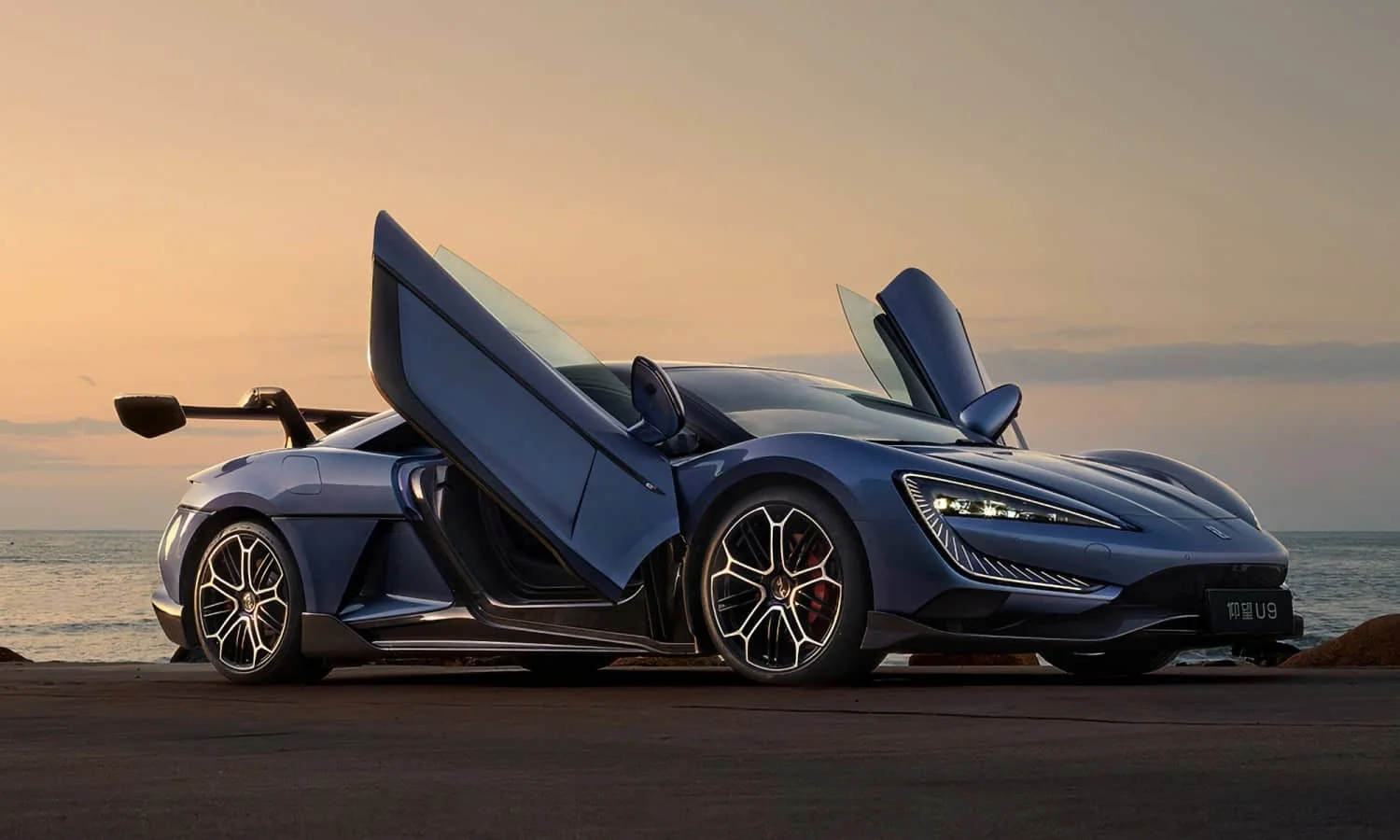
BYD’s DiSus X active body control system is the other headline act. This is the technology that lets the car manage each corner independently, with active damping, height control and roll control working in real time. It is the reason the U9 family could dance, lift a wheel and even perform party trick stunts in public. In a serious performance context, the point is not theatre. The point is grip, composure and the ability to keep the tyre contact patches where they belong when the speed climbs and the road starts asking difficult questions.
The carbon fibre monocoque gives the car the sort of structural stiffness expected of a hypercar, while active aero and a large rear wing work to keep it planted. Carbon ceramic brakes are fitted too, which is exactly where they should be on a car with this level of output and speed.
Spec block
Powertrain: Quad electric motors
Power: 960 kW, more than 3,000 hp claimed
Torque: 1 680 N.m
Transmission: Single speed reduction gearing
Top speed: 309,19 km/h
0 to 100 km/h: 2,36 seconds
Quarter mile: 9,78 seconds
Lateral grip: Up to 1,7G
Range” 450 km CLTC
Where South Africa fits in
South Africa is not about to become a natural home for this kind of machine. BYD’s local strategy is still centered on building volume and trust with models that sit much lower in the price stack, and that makes sense in a market where even premium EV infrastructure is still patchy outside the main metros. A 30 car, ultra expensive hypercar is the kind of product that usually arrives by special order, if it arrives at all.
If a U9 Xtreme did land here through an importer, the arithmetic would be brutal. Starting from about R49 million at the Chinese list price, then layering shipping, duty, VAT and the usual local cost stack, the final number would easily live north of R12 million even under an optimistic reading. Realistically, a fully landed South African example would almost certainly go much higher than that. At those levels, the buyer is not comparing it with an M2 or a Golf R. The shopping list starts with rare Ferraris, special series Lamborghinis and the odd boutique electric missile from Europe.
That may still leave room for curiosity. South African enthusiasts have grown used to Chinese brands arriving with more kit, better packaging and more confidence than the stereotypes allowed. The U9 Xtreme takes that progression to its logical extreme. It says BYD does not only want to build honest, value led EVs for the mainstream. It wants a seat at the table where engineering theatre, technology and excess all matter in equal measure.
For local petrolheads, that is the interesting part. The U9 Xtreme is not just a fast EV with a high price tag. It is a sign that Chinese performance cars now have the hardware, the ambition and the nerve to challenge the old order on its own terms.
Have your say
Got thoughts on this?
No feedback yet on BYD U9 Xtreme South Africa Welcomes the Ultimate Electric. Kick the conversation off.
Free. Email link only — no password.