



By the time you have walked the full length of the Beijing show halls, one pattern becomes impossible to ignore: China is no longer merely building cars, it is staging arguments about what a car can be. Some stood there dressed like toys, some like myth, some like desert hardware, and a few looked ready to run a grid or take on established supercar makers. The effect was chaotic in the best possible way.
For South African enthusiasts, the appeal is obvious. We know a good visual trick when we see one, but we also know when the engineering underneath is serious. This show delivered both. From a furry BYD crossover to a robotaxi with Level 4 FSD ambitions, the most eye-catching machines in Beijing were not novelty for novelty’s sake. They were signals of where Chinese brands think the next fight will be won. It’s well worth paying close attention as these brands are represented in SA and some models will make their way to our shores.
The Weird
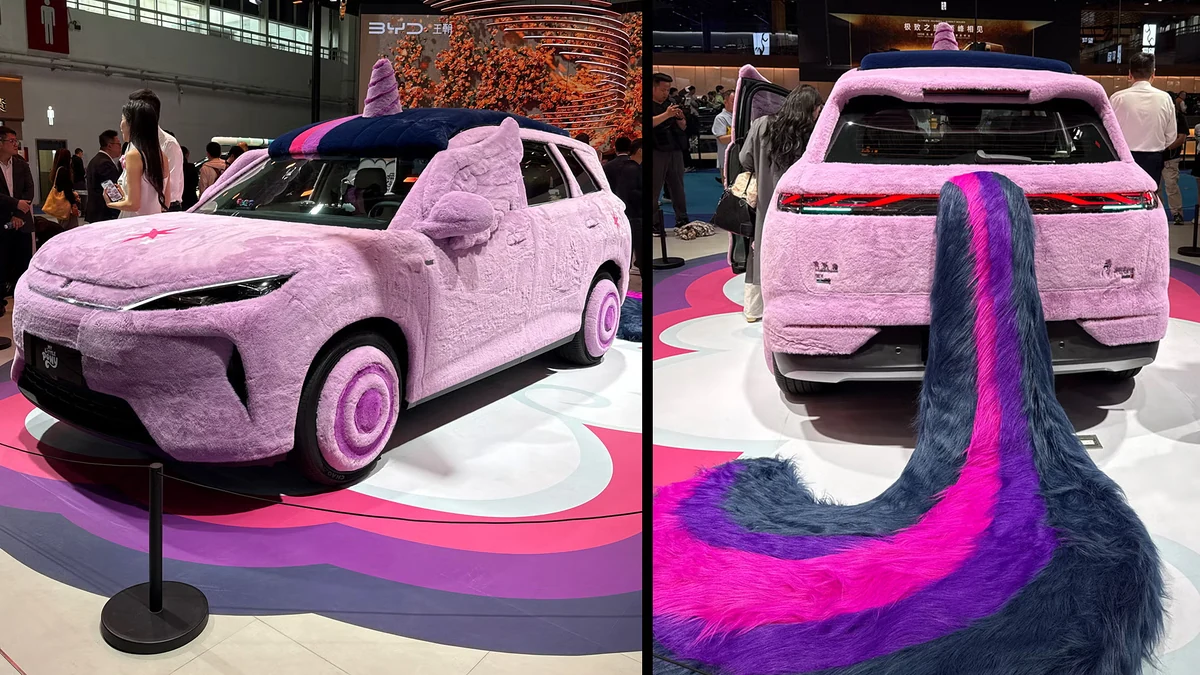
The strangest object on the floor was probably the BYD Yuan Plus, sold in some markets as the ATTO 3, which turned up wearing a full-body “My Little Pony” treatment. The effect was so unexpected it felt like a prank at first glance, yet it served its purpose: people stopped, stared and filmed. In a market where Chinese brands are fighting for attention as hard as they are fighting for buyers, even a dip in sales can inspire a theatrical answer.
Supercar Theatre, Chinese Edition
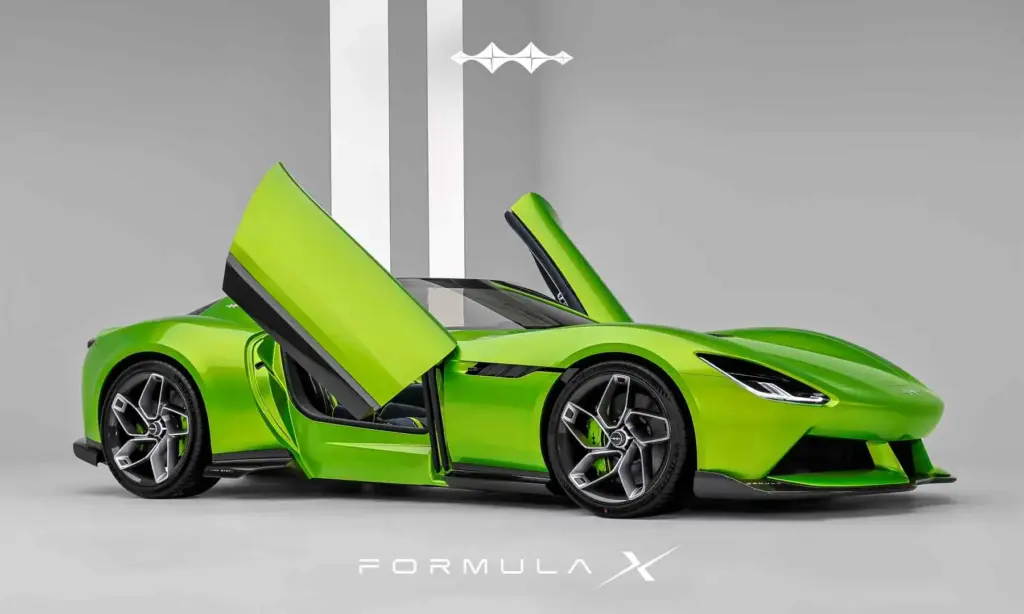
If Beijing wanted drama, Fang Cheng Bao answered the call with the Formula X. This is an all-electric supercar concept from BYD, but the execution goes well beyond a sketch exercise, it is touted for production within two years. Carbon-fibre body on a similar monocoque, scissor doors, an active rear spoiler, deep vents, visible diffusers and sharp lighting signatures give it proper exotic presence. The cabin, which is said to take inspiration from classic racing cars and modern fighter jets, features a retractable steering, fixed seats and four-point race harnesses. The powertrain features three electric motors for a total of 736 kW (1 000 hp) and 1 000 N.m of torque. In a show full of loud surfaces, this one looked engineered to cut through the noise.
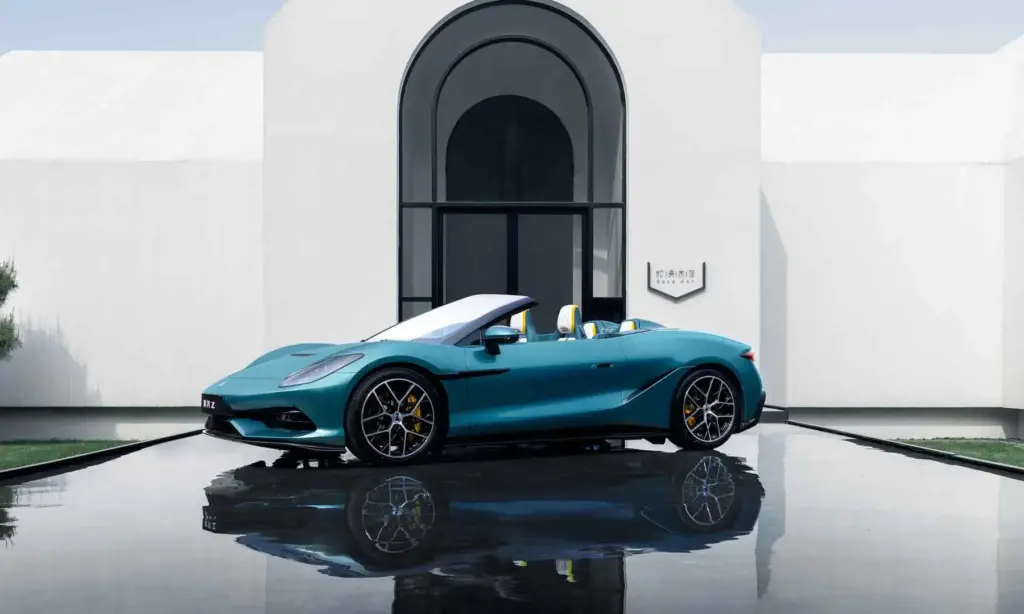
Denza’s Z roadster was another showstopper from a BYD sub-brand. It appears more like a sleek Italian than a Chinese knock-off. The numbers alone sound like a challenge to the established order: as much as 736 kW, a sub-2,0-second sprint from zero to 100 km/h and stated intent to take on the Nürburgring. It is styled as an evolution of a Wolfgang Egger concept and will be offered as both soft-top and hardtop versions, with a track-focused derivative also planned. If those claims reach production in anything like their current form, this will not be a token halo model. It will be a proper statement car.
New Premium Power Plays
Lotus took a different route with the Eletre X aka the For Me, which updates the Eletre with Geely’s new 900-volt plug-in hybrid system. The combined output is 700 kW from a hybrid powertrain. Two electric motors work with a 2,0-litre turbocharged four-cylinder, acting both as performance assistance and as generator support. The claimed 0-200 km/h time is around 3,3 seconds, and electric range is quoted at 418 km from a 70-kWh battery. The For Me was shown in John Player Special version (signature black and gold) and is limited to 87 units and is China-only for now.
The Useful
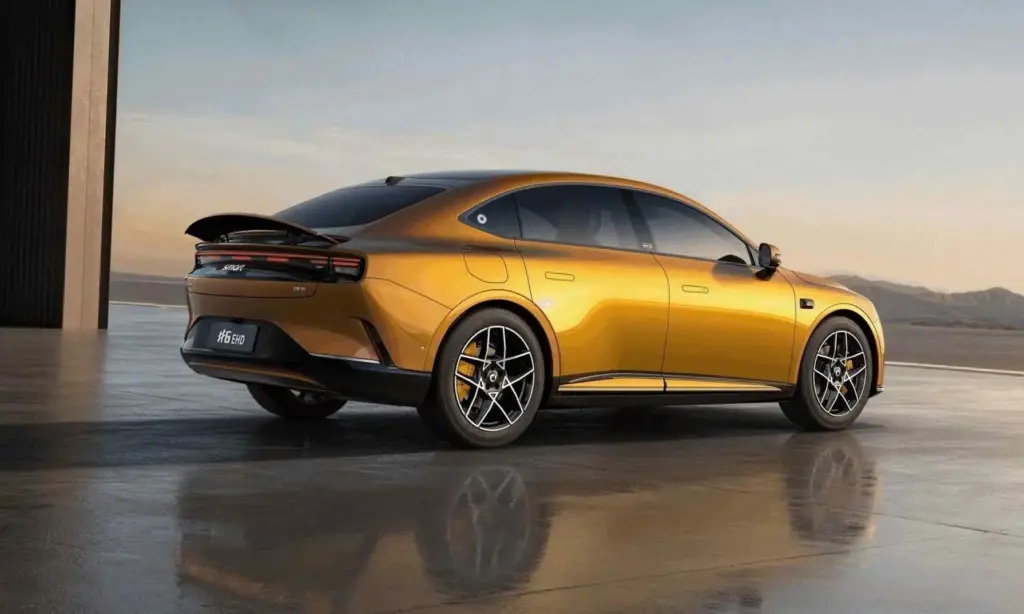
Smart’s #6 was one of the more puzzling reveals because it does not look like the small city runabout the badge once implied. It is a clean, almost anonymous sedan with vertical lighting front and rear, large brake calipers and a Mercedes-styled profile that even carries the point on the B-pillar. Under the skin it is a plug-in hybrid, and the quoted 0-100 km/h figure sits in the mid-six-second range. That is quick enough for the daily grind, yet the real surprise is how far the brand has drifted from its old image.
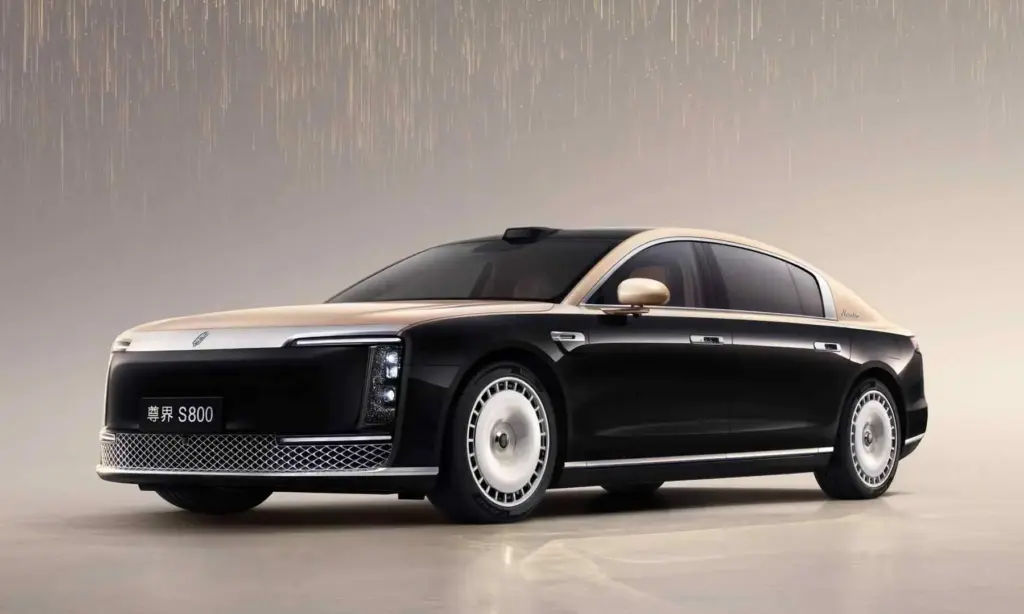
Then there was Maextro, a fresh ultra-luxury marque created in 2024 by Huawei and JAC. Its S800 is offered as either a full-electric or extended-range electric model and is pitched as the most advanced and most expensive Chinese-market vehicle in the room. The styling and ceremony around it aim squarely at Maybach territory, which tells you exactly who it wants to outshine.
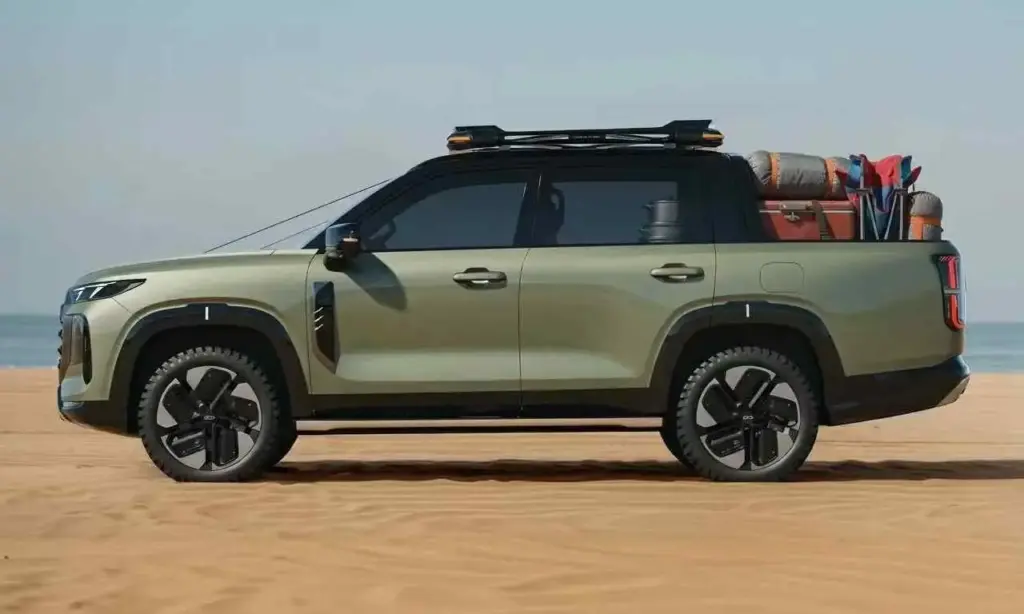
Chery pulled the wraps off one of the most unique production vehicles at the show in the shape, or should that be shapes, of the Tiggo V. The new model, which is coming to say, offers up to six configurations, according to the company. While many of those are seating related, the most interesting is the transformation from family SUV to bakkie. You can read more at our our original article by clicking this link.
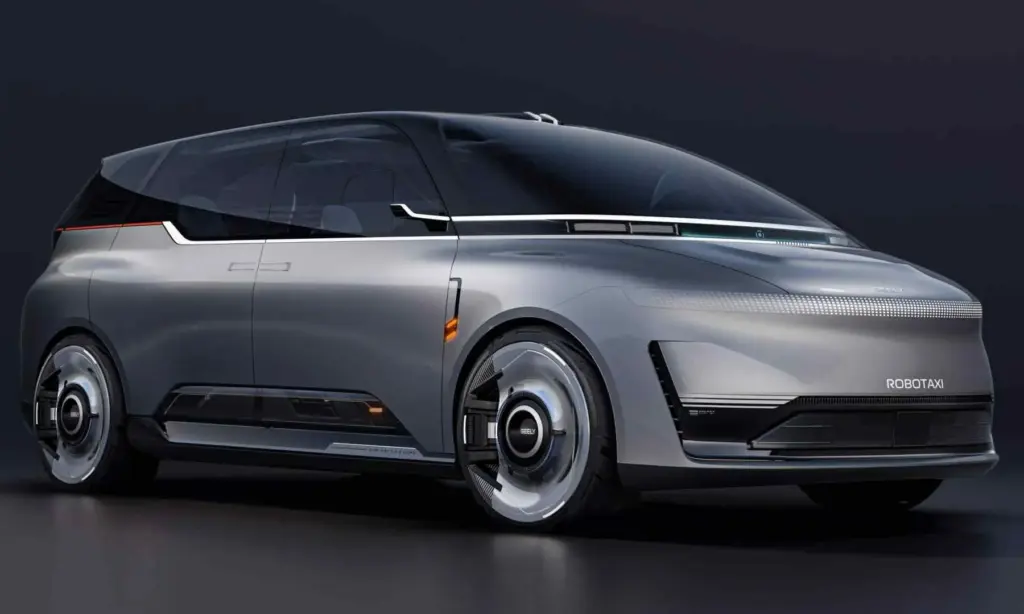
Finally, Geely’s EVA Cab gave the show floor a glimpse of the robotaxi future. It is billed as China’s first true purpose-built autonomous cab, built on EEA 4.0, which Geely describes as a quantum-level AI E/E architecture. The G-ASD system is said to be Level 4-ready for mass production, with road use near Beijing pencilled in as early as 2027. That is not a distant concept. That is a commercial plan with a calendar attached.
For all the styling excess, the real story in Beijing was ambition. Chinese brands are not only chasing attention. They are chasing categories, from overland trucks to hyper-EVs to driverless cabs. The result is a show full of machines that are hard to ignore and harder to dismiss.

Have your say
Got thoughts on this?
No feedback yet on Showstoppers from the 2026 Beijing Auto Show. Kick the conversation off.
Free. Email link only — no password.