
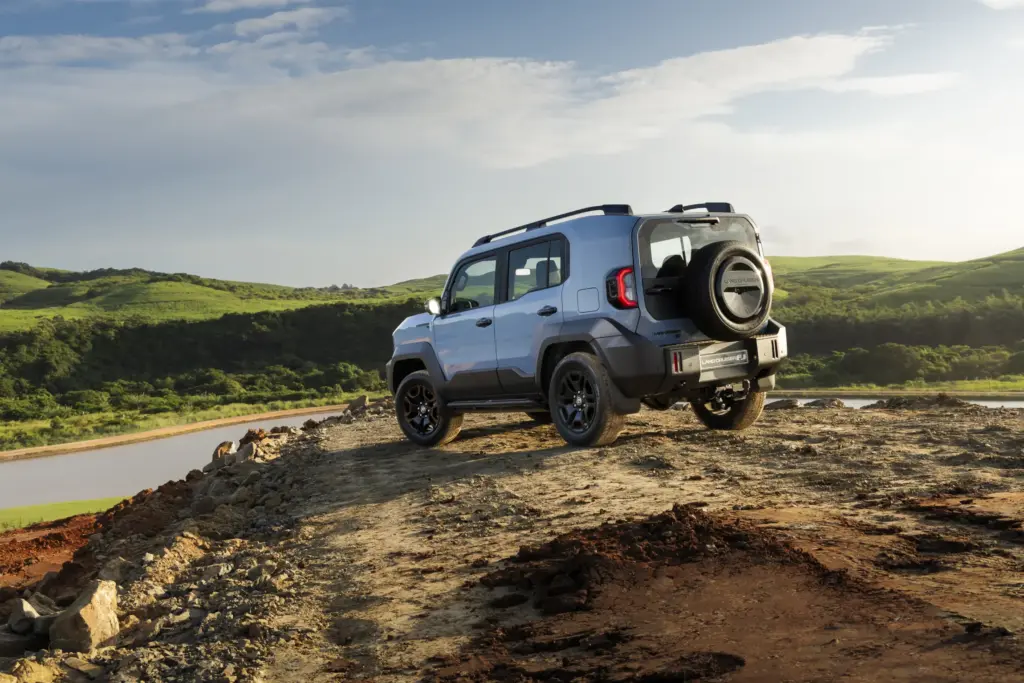


South African buyers have spent decades proving that the Land Cruiser badge is not decorative. It is farmyard hardware, reserve-road insurance, mining-site muscle and family-haul backbone, often all in the same month. Toyota’s new Land Cruiser FJ takes that reputation and shrinks it into something you can live with in the city without filing off the edges that made the name matter in the first place.
This is the compact Land Cruiser that the urban crowd has been waiting for, although Toyota would rather you think of it as a tool for people who split their lives between traffic, gravel and open country. It lands here as a new chapter in a story that began with the BJ in 1951, and it arrives with enough heritage cues to keep the old guard interested while giving younger buyers a cleaner route into the badge.
Follow Double Apex on Instagram and Facebook where we share more car content.
Design that knows its own history
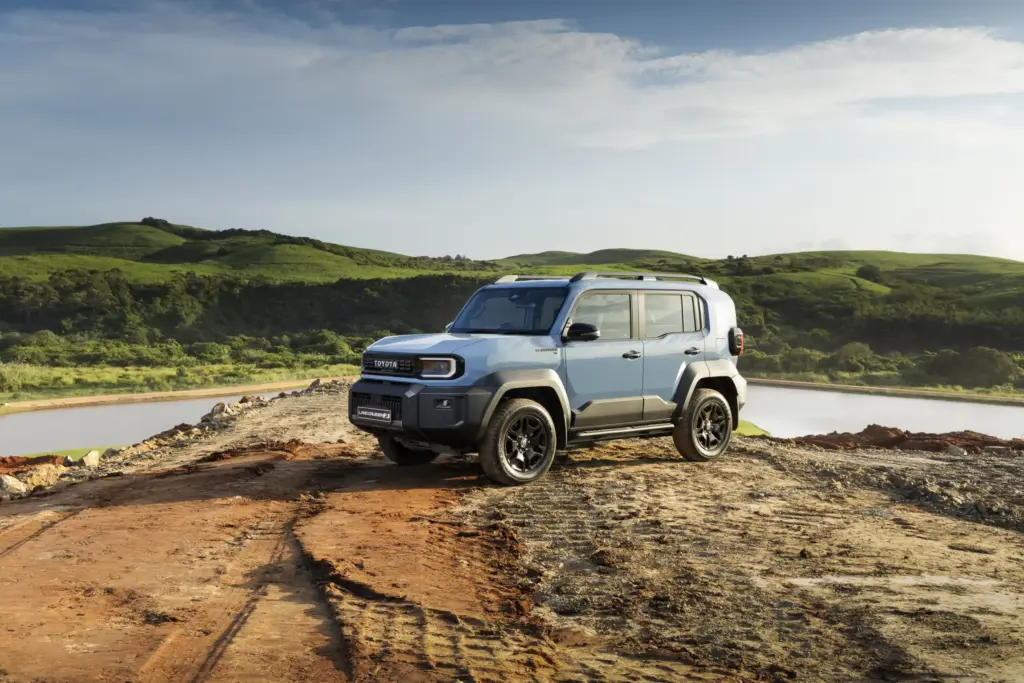
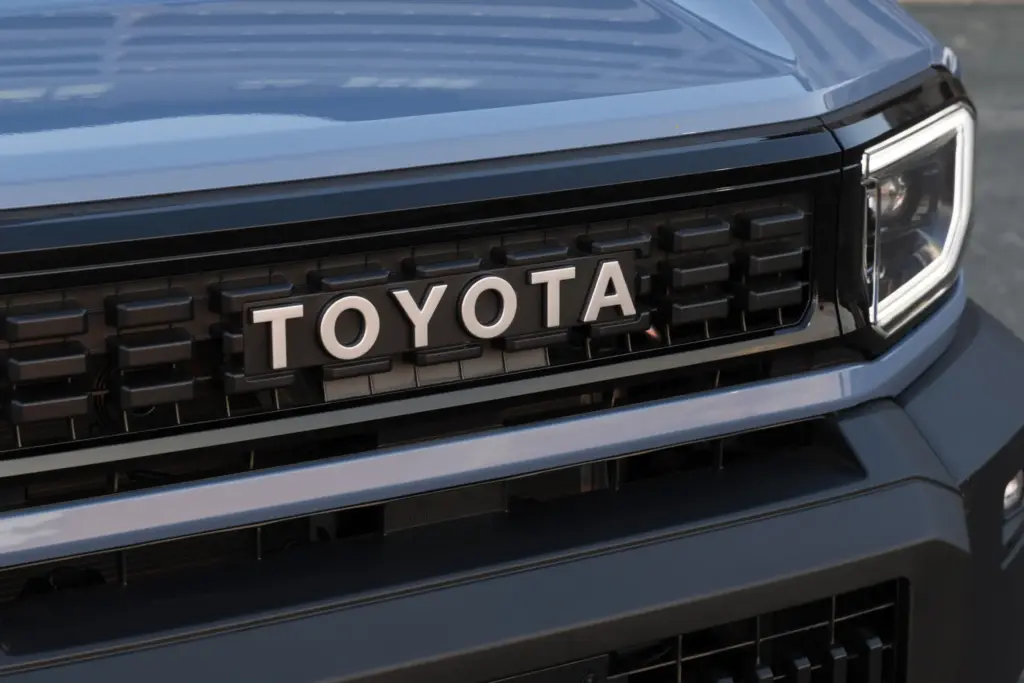
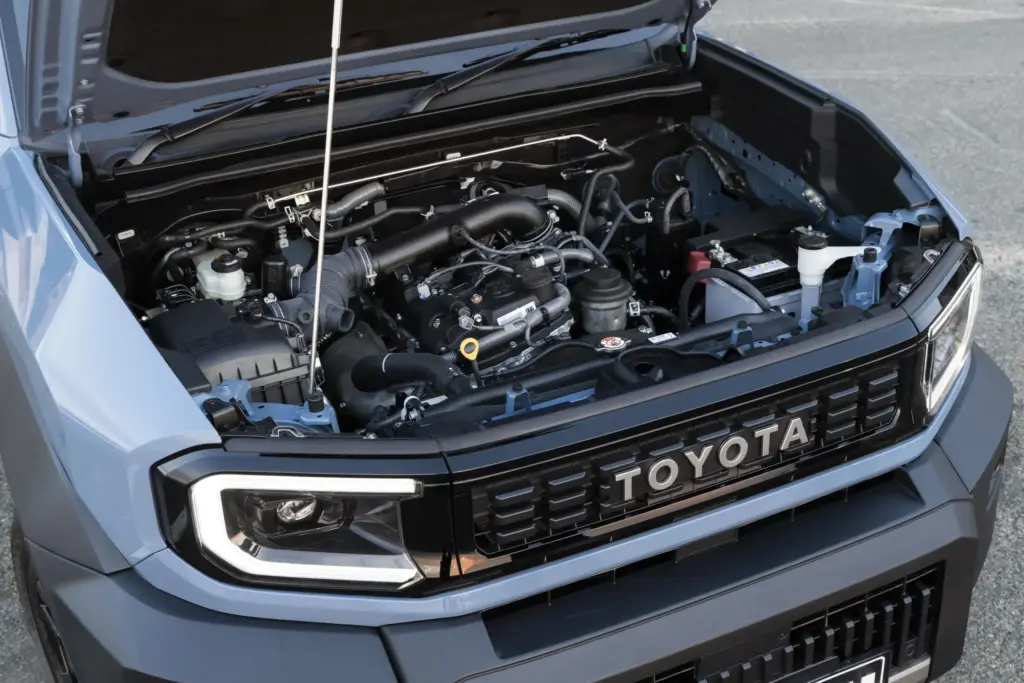
The FJ leans into the old Land Cruiser language without turning into a nostalgia prop. The cabin stays square, because square is useful. It gives you visibility, useful load space and the stance people have associated with the badge for generations. The front end gets a large TOYOTA badge on the grille, square LED headlamps mounted high, split bumpers, skid plates and obvious fender treatment. It looks like something built for contact, not just Instagram.
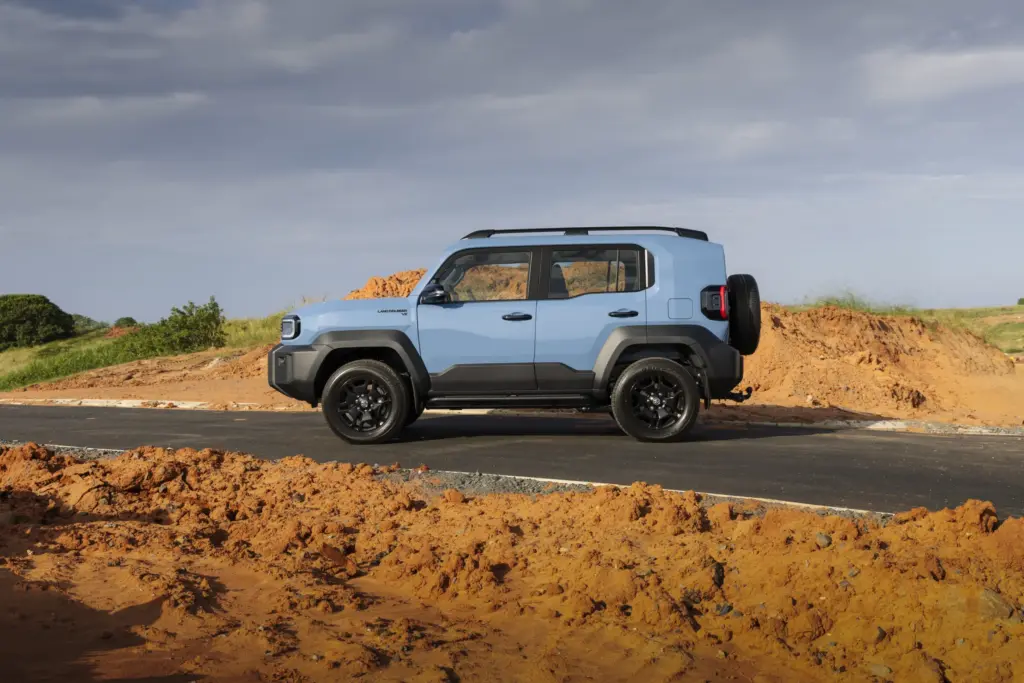
The rear-mounted spare wheel and side-hinged tailgate are exactly the kind of practical detail Land Cruiser buyers notice first. Toyota has also split the front and rear bumpers into sections so damaged pieces can be replaced individually after a hard outing. Toyota expects this thing to wear dust and scrape marks.
A smaller Cruiser with proper bones
The FJ rides on a ladder-frame chassis derived from Toyota’s IMV architecture, then gets extra bracing, high-tensile steel and the usual Land Cruiser focus on durability. That matters because the vehicle is only as convincing off road as the structure underneath it, and Toyota has not built this one to look rugged from a mall parking bay.
This generation FJ measures 4 575 mm long, 1 855 mm wide and sits on a 2 580 mm wheelbase. Compared with the Prado, it is 350 mm shorter, 125 mm narrower and 270 mm shorter between the axles. The result is a turning circle of 11 metres, which should make it far easier to thread through tight urban gaps, narrow parkades and the sort of awkward tracks that leave bigger SUVs doing multipoint turns in the bush.
Toyota has also kept the geometry honest. Ground clearance, approach angle and departure angle are all part of the package. This is the sort of thing Land Cruiser buyers understand immediately. A bluff nose and chunky arches are decoration. Geometry is what gets you home.
Cabin built for use, not fuss
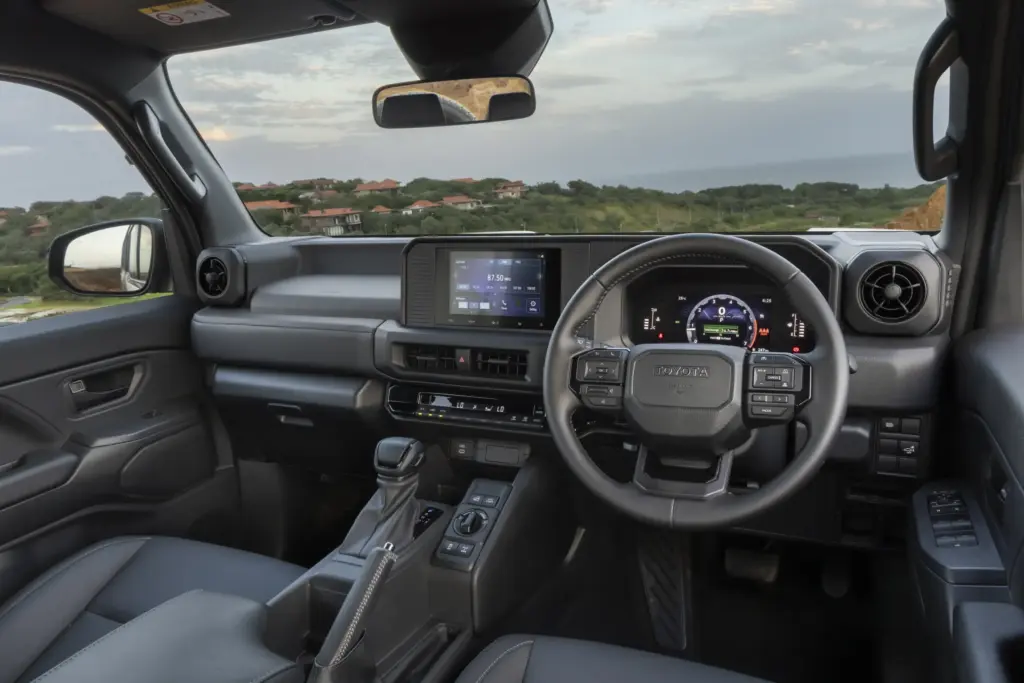
Toyota calls the interior idea Functional Fun. The dashboard sits low, the controls are grouped sensibly and there is enough physical switchgear to avoid forcing everything through a touchscreen when the road turns rough.
Equipment includes an 8,0-inch infotainment screen a 7-inch TFT information display, a wide centre console, utility storage spaces, knee pads for rough-road comfort and a practical control layout. The FJ seats five, with split rear seats that slide and recline to make better use of the space. It still offers decent luggage room despite its compact proportions, which is the whole point of this vehicle. GX versions wears fabric seats, resin trim and a urethane steering wheel. The VX steps up to synthetic leather trim and a leather wheel, along with a more polished feel.
GX and VX
The GX is the more traditional Land Cruiser FJ. Black bumper mouldings, a matte black lower front guard, 17-inch dark grey metallic alloy wheels and manual-levelling LED headlamps give it a tougher, more stripped-back appearance. It is the one for buyers who want simplicity, easier ownership and a vehicle that feels ready for overlanding accessories straight out of the box. Toyota is clearly aiming the GX at long-time Land Cruiser loyalists and overlanders, enthusiasts actually use vehicles like this.
The VX is the more urban-friendly take. It adds a silver lower front guard, 18-inch black alloy wheels, auto-levelling LED headlamps with, Panoramic View Monitor and enhanced Parking Support Brake. Toyota Safety Sense 3.0 also comes into play here with Pre-Collision System, Full-Speed Range Adaptive Cruise Control, Lane Departure Alert and Adaptive High Beam System. None of that appears on the GX.
One Powertrain
Power comes from a naturally aspirated 2,7-litre petrol engine, which makes 122 kW and 245 N.m at 4 000 r/min. Drive goes through a six-speed automatic, tuned for low-speed control, a calmer cruise on the highway and a better first gear for climbing and traction. Fuel use is quoted at 10,7 litres per 100km. For a body-on-frame 4×4 with proper off-road hardware, that sits in familiar Land Cruiser territory rather than pretending to be a crossover on a diet.
The part-time 4WD system offers H4 and L4 modes, and Toyota adds a rear differential lock, Downhill Assist Control, Hill-start Assist Control, ECT 2nd mode and Vehicle Stability Control. Under the skin, the FJ also uses LC Prado-derived front drivetrain parts and a lightweight prop shaft based on the Fortuner’s.
Land Cruiser FJ Pricing
GX – R714 000
VX – R761 400


Have your say
Got thoughts on this?
No feedback yet on Toyota’s Land Cruiser FJ Brings the Legend to South Africa’s…. Kick the conversation off.
Free. Email link only — no password.